Introduction
INDIVIDUAL work
Duration
Tools
I have observed that many individuals with joint injuries often face challenges in achieving optimal rehabilitation outcomes due to emotional and pain-related issues during their training sessions. Through a combination of interviews, co-design processes, and literature research, my goal is to enhance users' motivation and confidence in Range of Motion (ROM) rehabilitation training. This will be achieved by providing timely and interactive feedback designed to address their concerns effectively and alleviate pain.
Interview
Interaction Design
Modeling
User Test
Prototype Fabrication
10/15/2023 - 12/30/2023
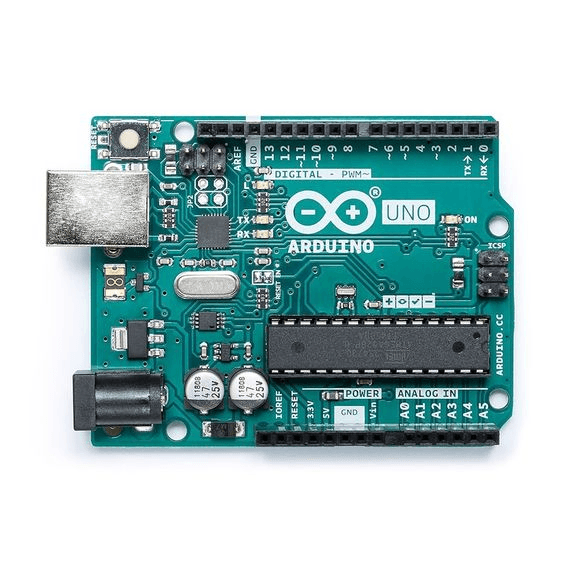
Arduino
Rhino
Keyshot
Figma
ROM rehab with ease
Background research
Background
Stumble
Accident
Sports
injury

Depression

Discomfort
Range of motion (ROM) limitations

Sun Mengnan
26
4 years rehabilitation therapist
“ROM limitations arise from injuries, arthritis, swelling, surgery, age-related changes, etc. Treatment involves personalized approaches like PROM (Passive Range of Motion) and AROM (Active Range of Motion) training, along with physical therapy and exercises.”
PROM and AROM are crucial for addressing ROM issues, with PROM preventing stiffness and AROM strengthening muscles.
1st Primary Interview
Conclusion
During the rehabilitation training process, trainers mainly have the following questions:

Start

Feeling the routine tedious.

Experiencing fear and anxiety caused by discomfort or pain.

Feeling uncertain of effectiveness.

Feeling disappointed and lacking confidence due to not achieving the set goal.

Guolicheng
27
Leg fracture
06/2022 Rehabilitation
04/2022 Treat
“The main challenge in rehab is the pain, especially during leg movements. The calf muscles ache and swell, making it hard to find the motivation to continue the exercises.”
Pain discourages joint flexion and extension movements.

Yang
31
ACL Tear and Meniscus Suture
08/2020 Rehabilitation
05/2020 Treat
“I frequently worry about my knee's progress. Daily measurements consistently disappoint, impacting my emotional well-being. Precision challenges with measurement tools create uncertainty and strain.”
Anxiety arises from a lack of visible progress and doubts about measurement tool accuracy.

Kaka
30
ACL Tear
11/2021 Rehabilitation
10/2021 Treat
“A week after surgery, I began adjusting my knee joint angle. The therapist's assistance, if needed, might be more uncomfortable than self-training. So, if self-training falls short, seeking help becomes a concern.”
Fear of pain and a lack of confidence in achieving goals.
Sun Mengnan
26
4 years rehabilitation therapist
“ROM limitations arise from injuries, arthritis, swelling, surgery, age-related changes, etc. Treatment involves personalized approaches like PROM (Passive Range of Motion) and AROM (Active Range of Motion) training, along with physical therapy and exercises.”
PROM and AROM are crucial for addressing ROM issues, with PROM preventing stiffness and AROM strengthening muscles.

Yatelandisi
29
ACL Tear
12/2021 Rehabilitation
11/2021 Treat
“Due to slow progress in mainland China's rehabilitation, many, including myself, faced increased pain from aggressive methods. Now, I advocate for a gradual, scientifically informed way to minimize pain without forceful techniques.”
Wishing for gradual and scientifically oriented training.

Su
23
ACL Tear
04/2019 Rehabilitation
03/2019 Treat
“Sustaining a positive mindset amid setbacks is my main rehab challenge. Encountering discouragement and self-doubt makes quitting an option. Limited counseling hinders positive emotional outcomes in my recovery.”
Hoping for improvement in feelings of unconfidence.
After pandemic restrictions eased, there was a surge in outdoor activities like travel, hiking, and skiing. However, this enthusiasm led to unintended consequences.
Therefore, ,my next step is to design a product to reduce monotony, discomfort, fear and anxiety related to these movements and improve self-efficacy
2Nd Interview with Initial Ideas
The game, music, and vibration solutions were discussed again with five interviewed users. The idea comes from the literature research of one way that self-efficacy can be improved is through the use of feedback that can be easily attended to by reducing anxiety and overriding the attention to pain.
Conclusion
Users need timely feedback and encouragement
Users hope to know the angle during the training process
Users tend to use music and light, but are not inclined to games.


Idea Game
“The games used in many rehabilitation exercises are often too childish.”
“In ROM training, I'd rather avoid playing games to keep my focus and energy undistracted.”
Idea Feedbacks
“I've experienced the joy of music therapy in a hospital, and I'd love to see music elements in the product.”
“I used to watch the timer, but training with music improved my results significantly.”
“I want real-time feedback on my angle and timely encouragement to overcome negative emotions and thoughts of giving up.”
“I hope to receive special cues and encouragement every time I make progress.”

literature research
Conclusion
We can use music in real-time to inform users of their current level and phase.
We can employ unstable sounds to encourage further progress in cases where the target angle has not been achieved, and rewarding achieved goals or improvements with stable melodies.
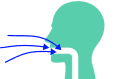
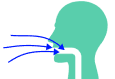
During the static phase, especially when patience through discomfort is crucial, guiding breathing patterns can help alleviate pain.
Prior studies show self-calibrated movement sonification shifts attention from pain to movement, using sound and music to effectively manage anxiety and reduce pain.
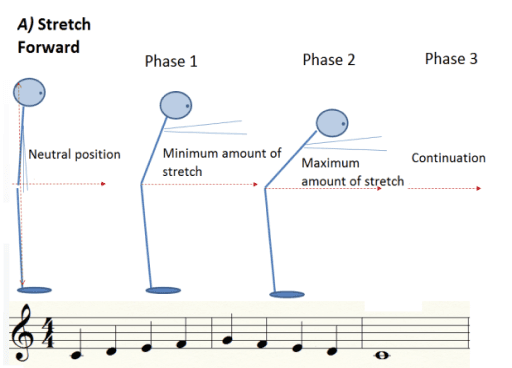
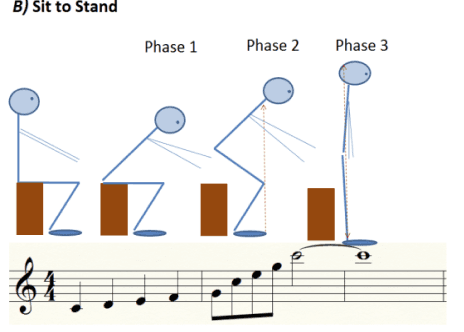
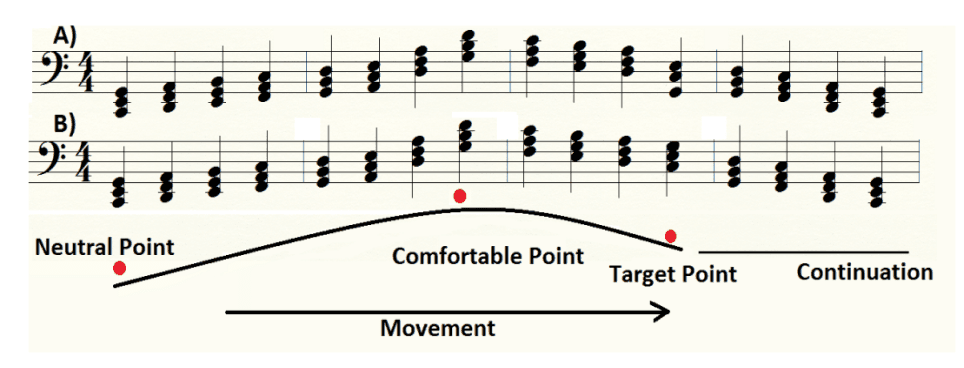
The level of musical stability can be used to create a degree of ambiguity as to how far a certain phrase or movement should go before ending.
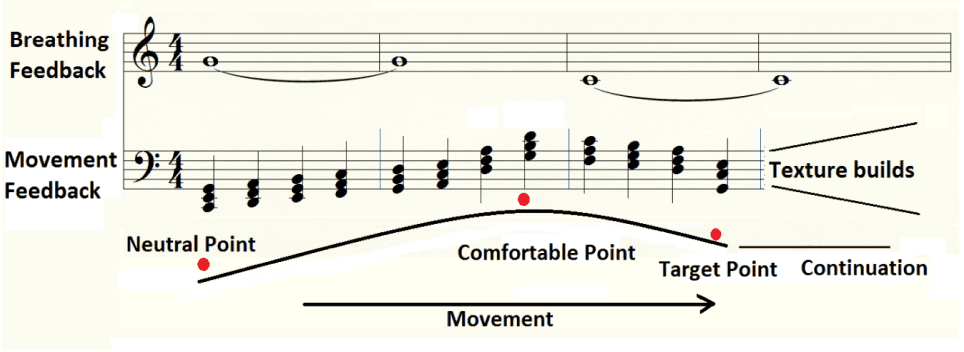
The breathing feedback could be used in unison and with a reference rhythm to provide pacing for both breathing and movement activities.
Sonifying the phase through melody enhances awareness of movement performance. This design, however, necessitates defining movement space boundaries to boost confidence in motion.
About ROM
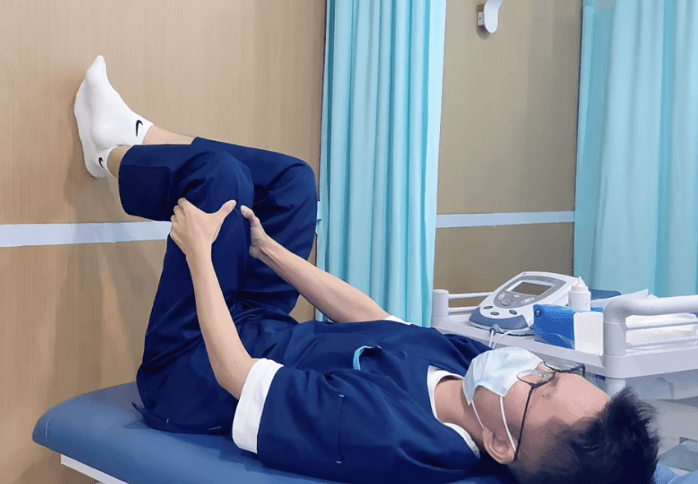
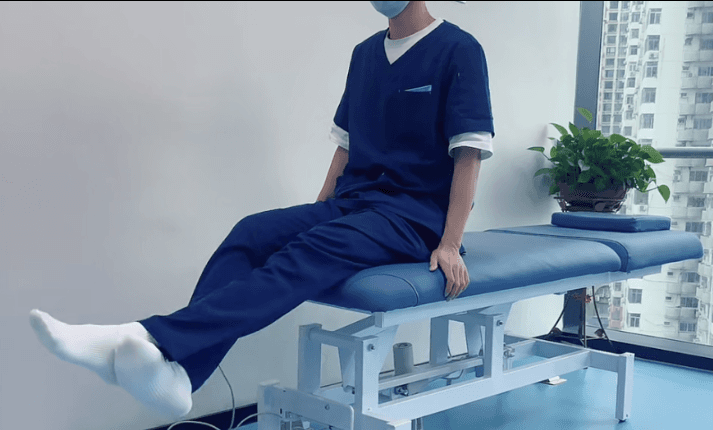
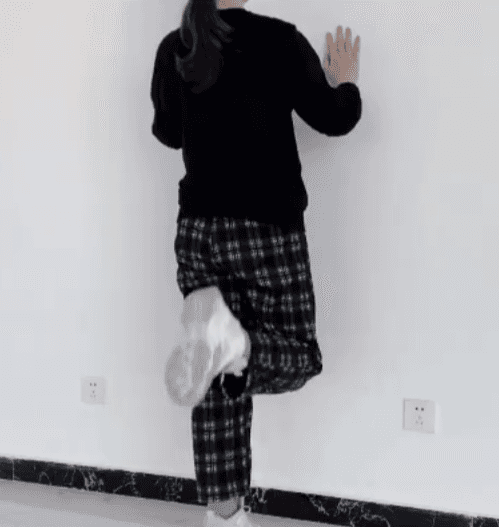
PROM
AROM
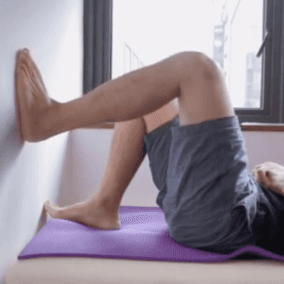
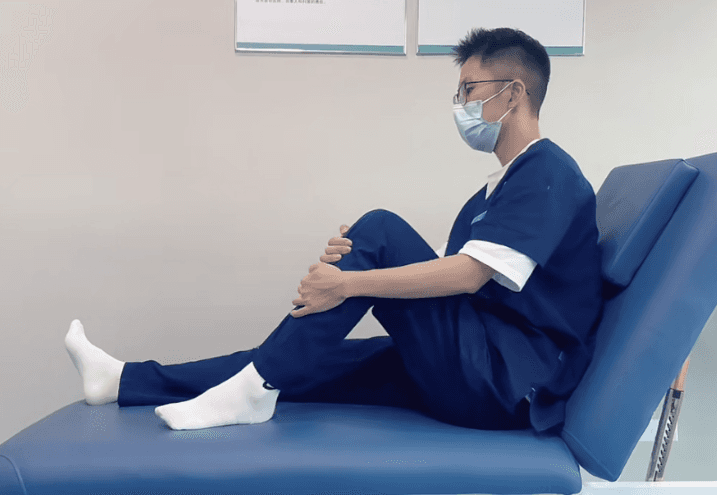
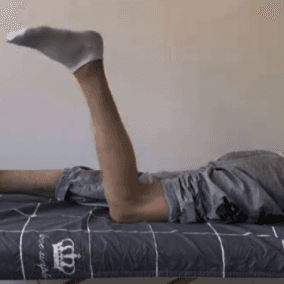
PROM stands for "Passive Range of Motion," referring to the extent a joint can be moved by an external force without the individual using their own muscles.
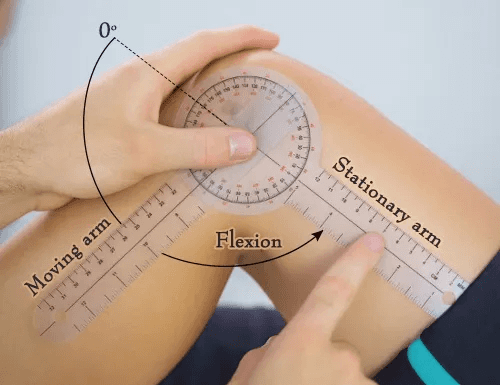
Through the first round of user interviews, I learned about the PROM and AROM rehabilitation methods. I read the literature for in-depth understanding and summarized the key information.
AROM stands for "Active Range of Motion," indicating the range a joint can move voluntarily using the individual's own muscles.
Goniometer
Poor Alignment
Muscle Contraction
Patient Discomfort
Intra- and Inter-observer Variability
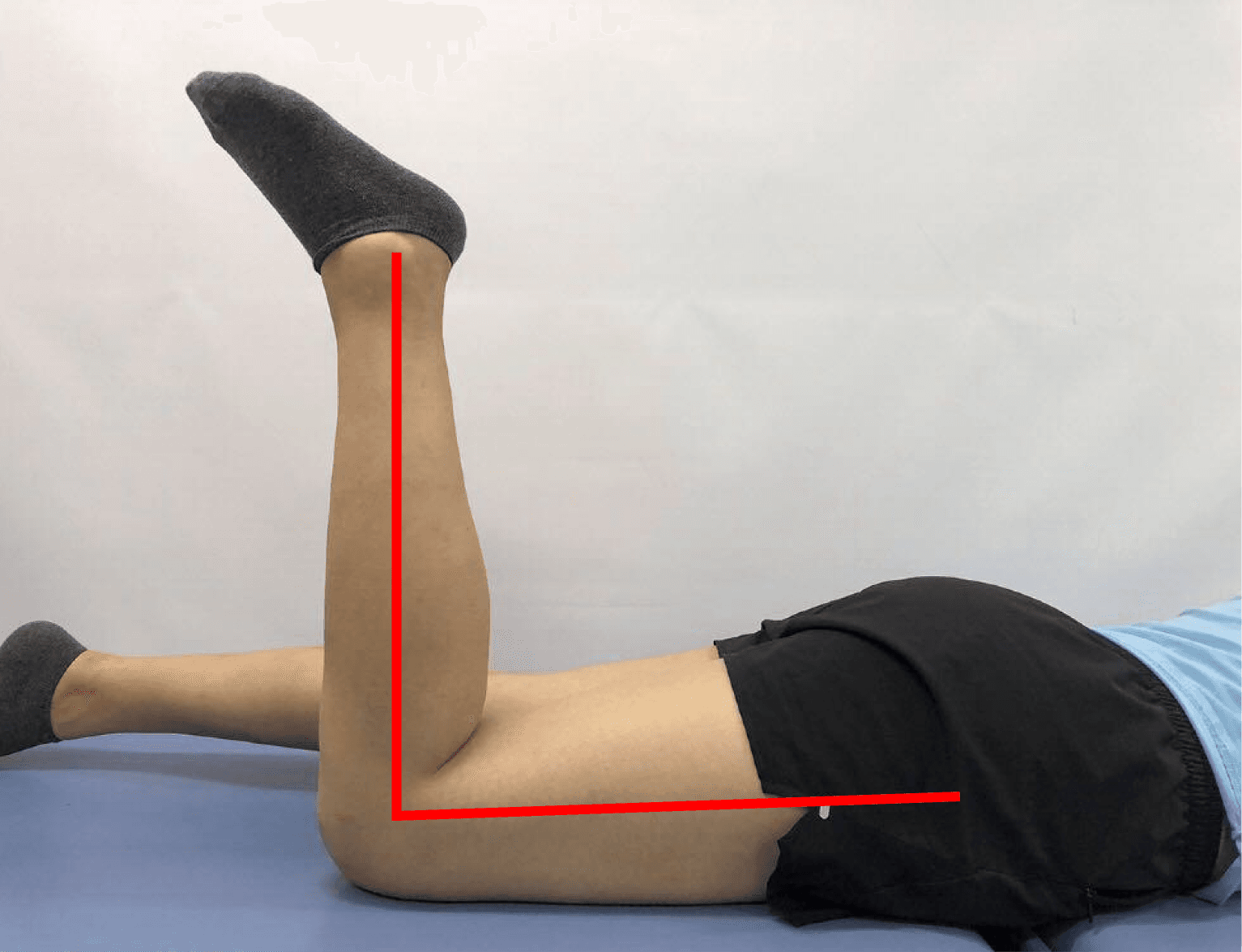
Apps
Generally reliable
Errors may arise from camera angles
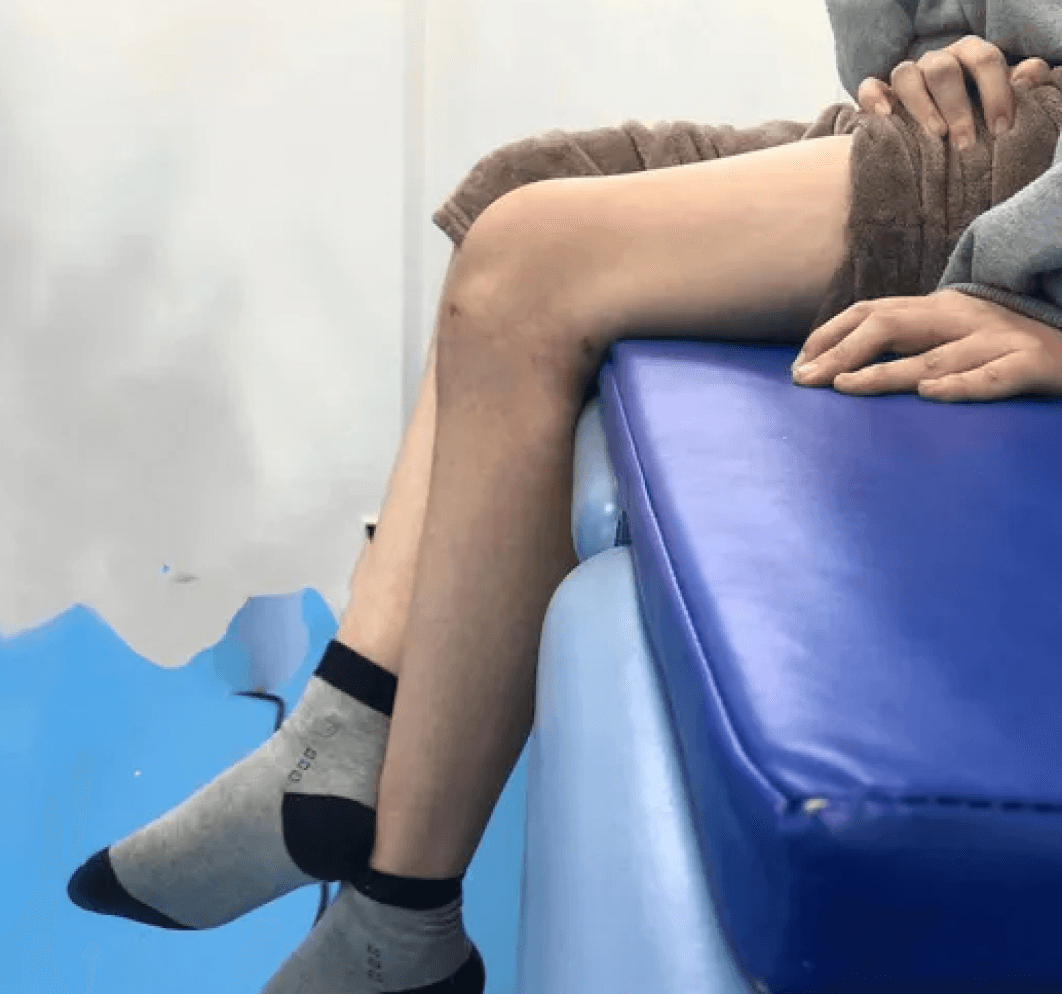
Visual Estimation
Convenient but imprecise,
Suitable for rough assessments
Pain-induced visual errors are common
Passive Stretching Phase
Static Stretching Phase
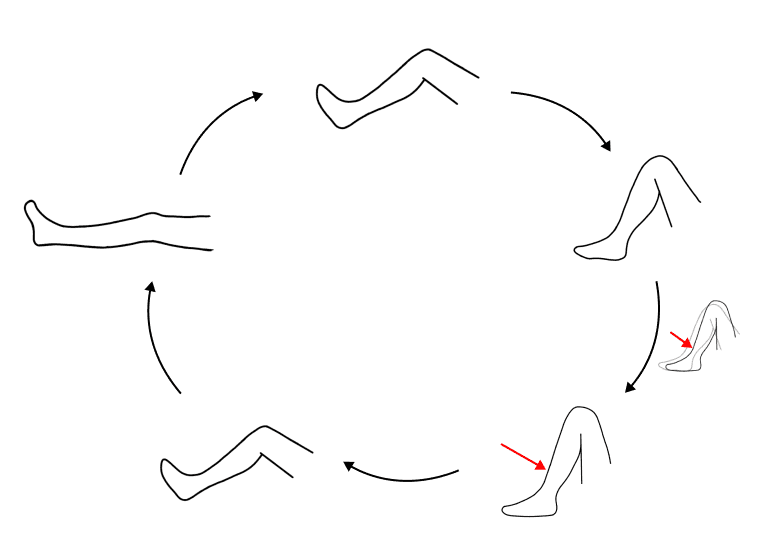
Isometric Phase
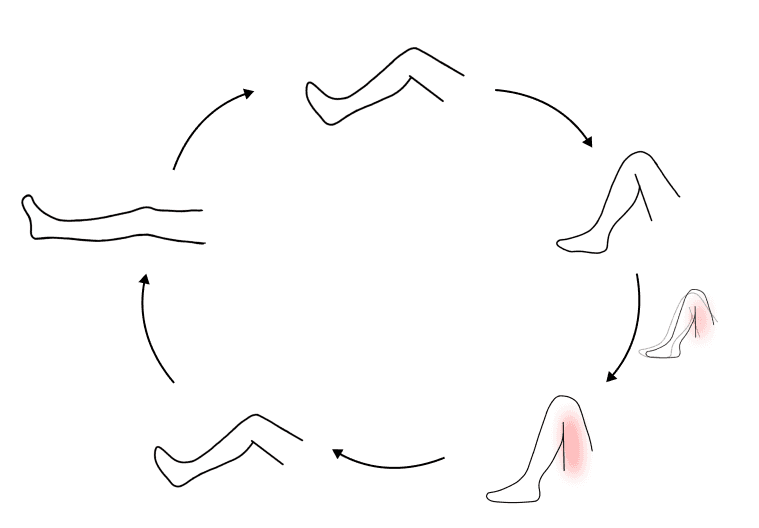
Active Flexion Phase
Conceptualization
Ideation from expert
Music therapy enhances ROM training, promoting comfort, engagement, and joint flexibility through emotional regulation and rhythmic guidance, creating a positive environment for patients in their rehab journey.

ROM Measurement
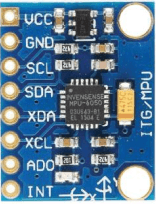
Inertial Measurement Unit:IMUs can capture dynamic motion changes.
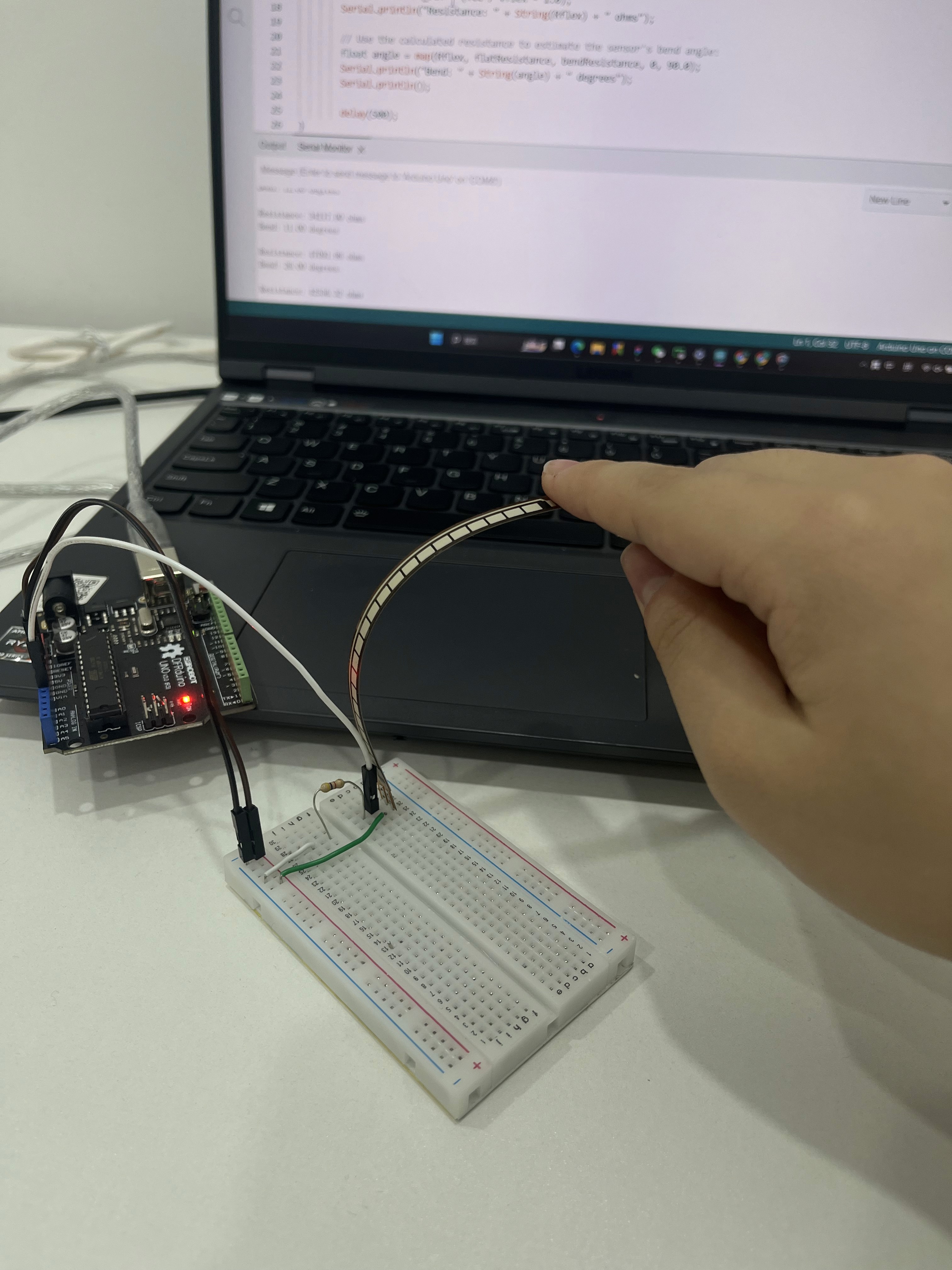
FLEX Sensor:Flex sensors may not provide accurate data during rapid movements.
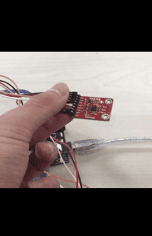
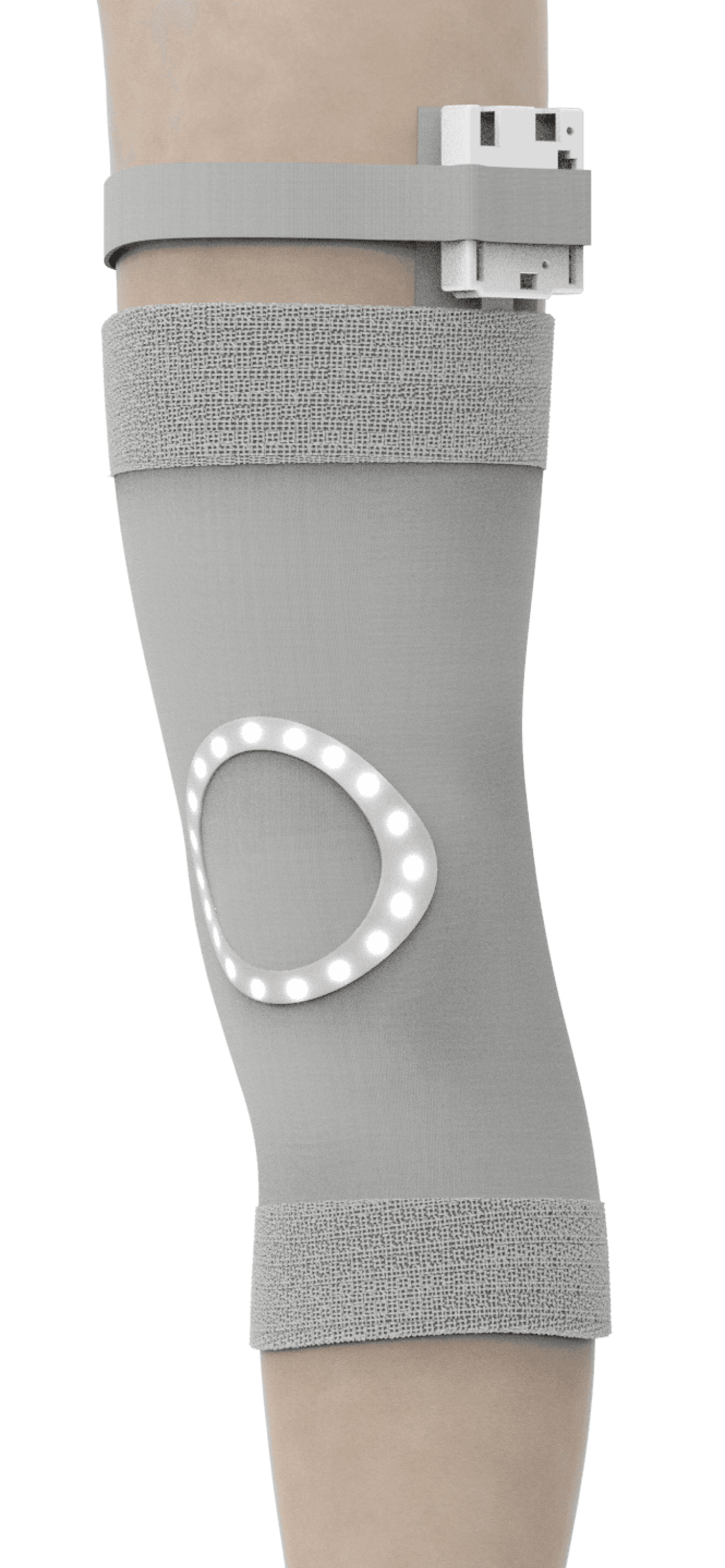
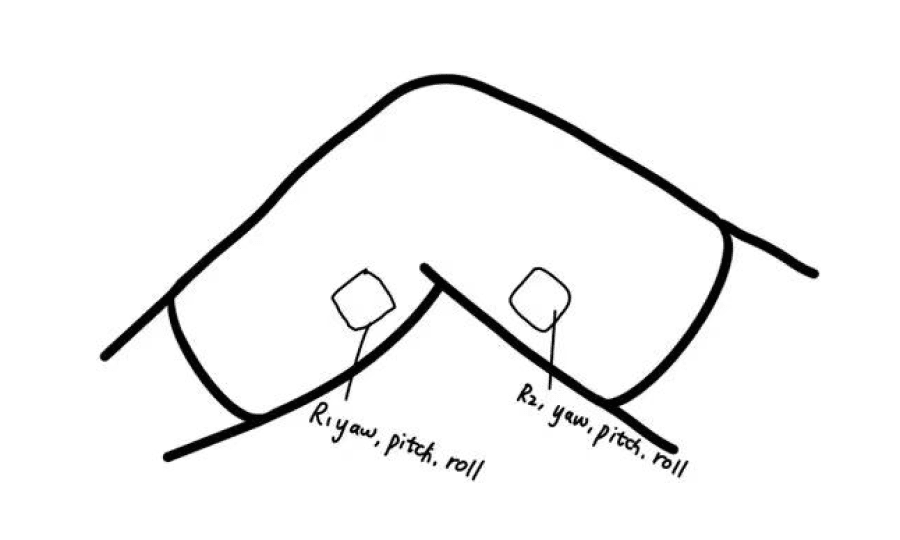
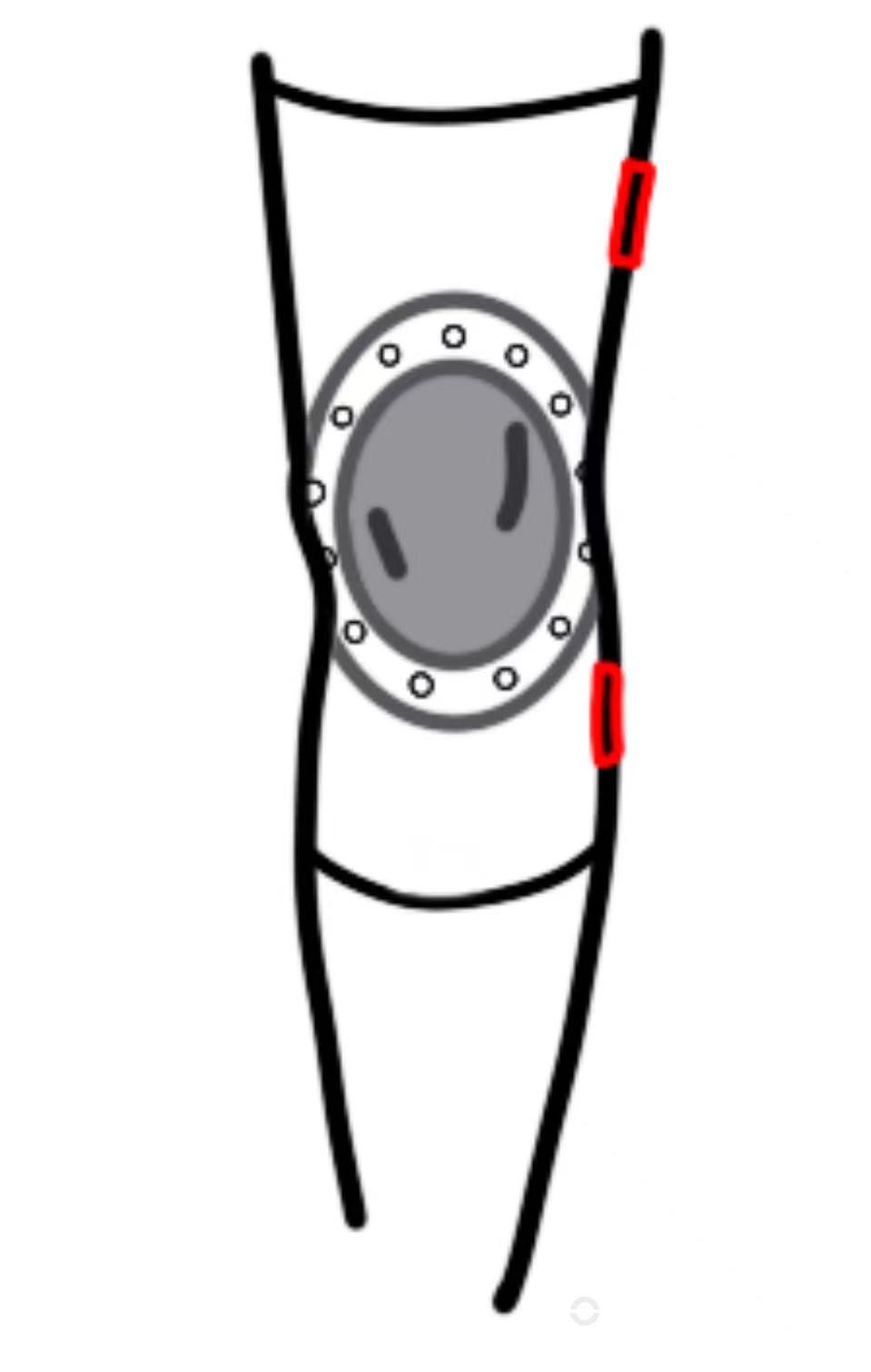
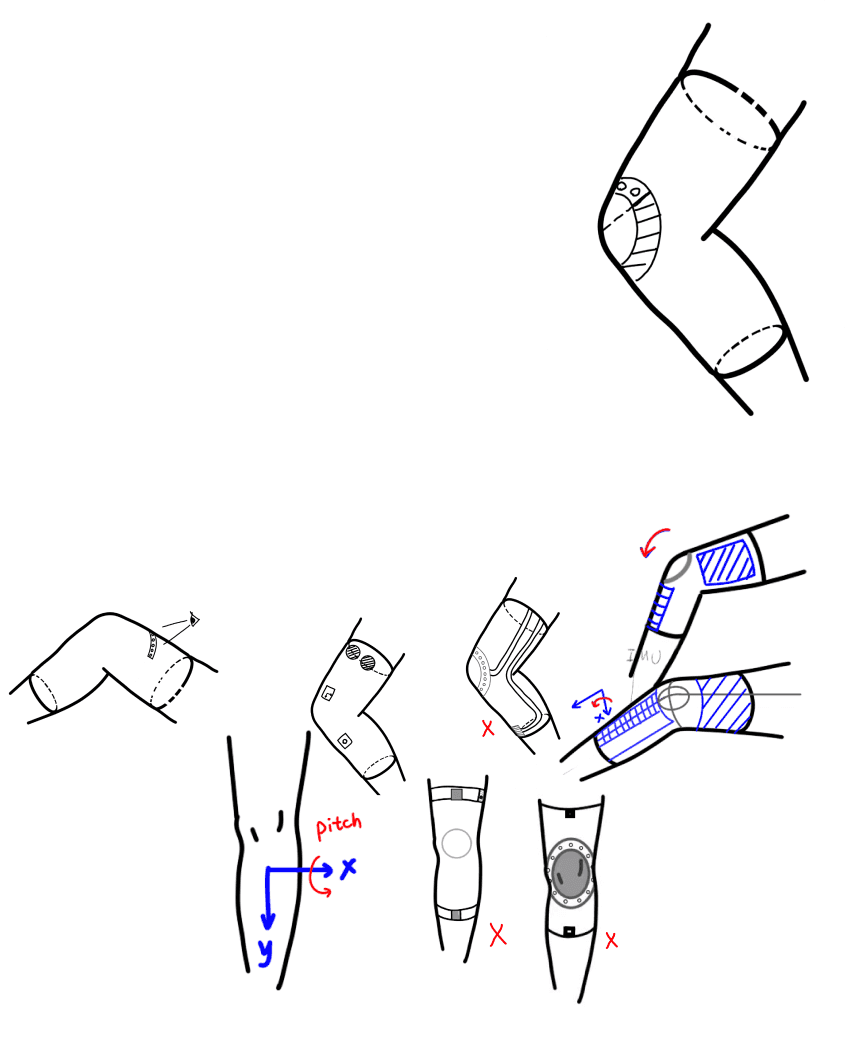
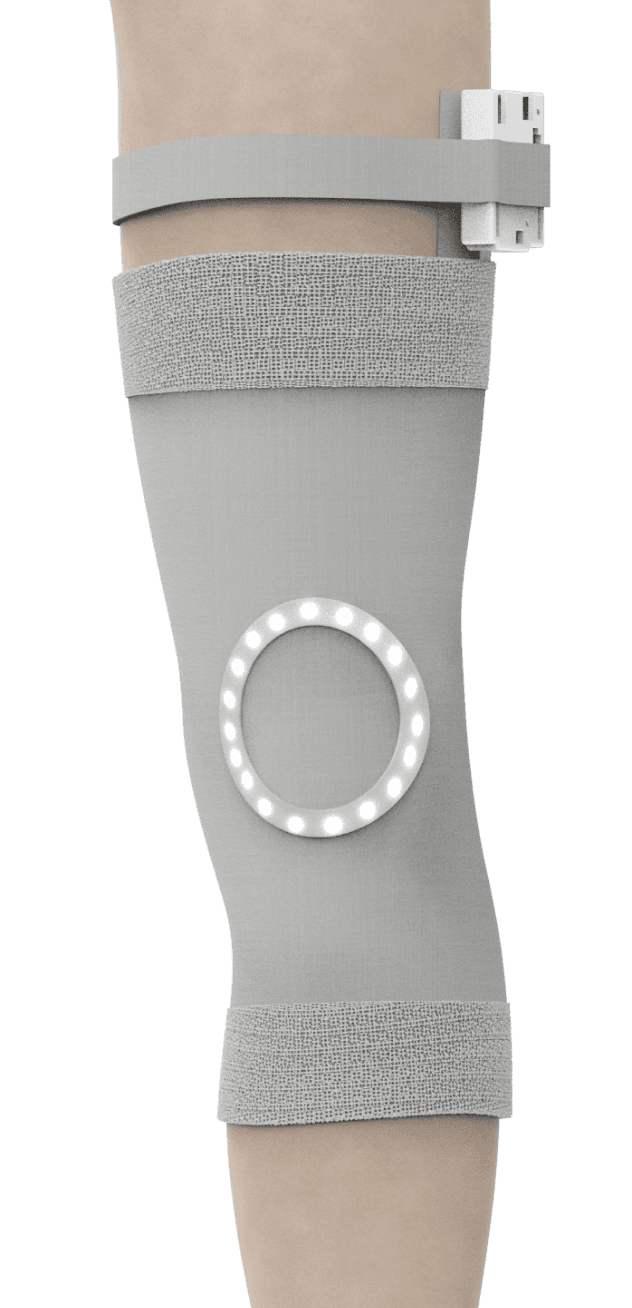
IMU Position: outer side of the thighs and calves
Observing user rehab, I found placing the IMU on the outer side minimizes interference, avoiding compression issues compared to above, below, or on the inner side of the leg.

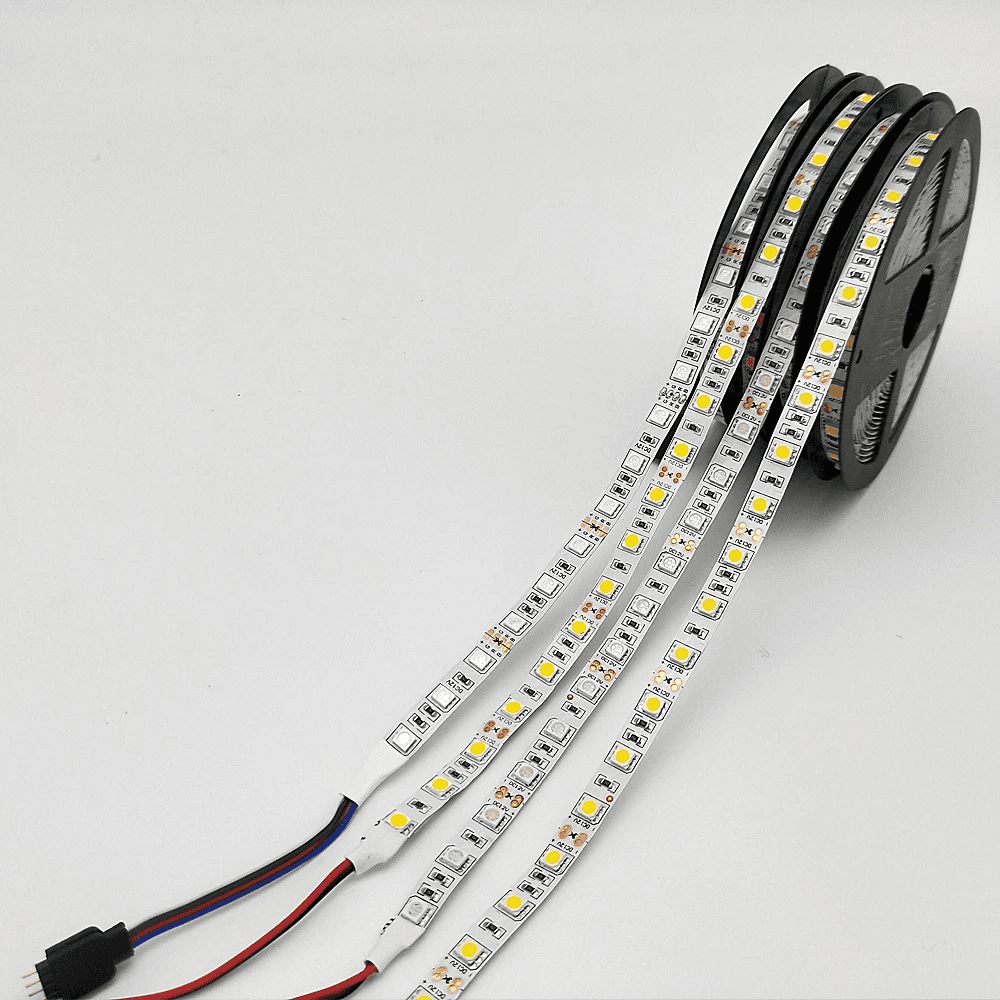
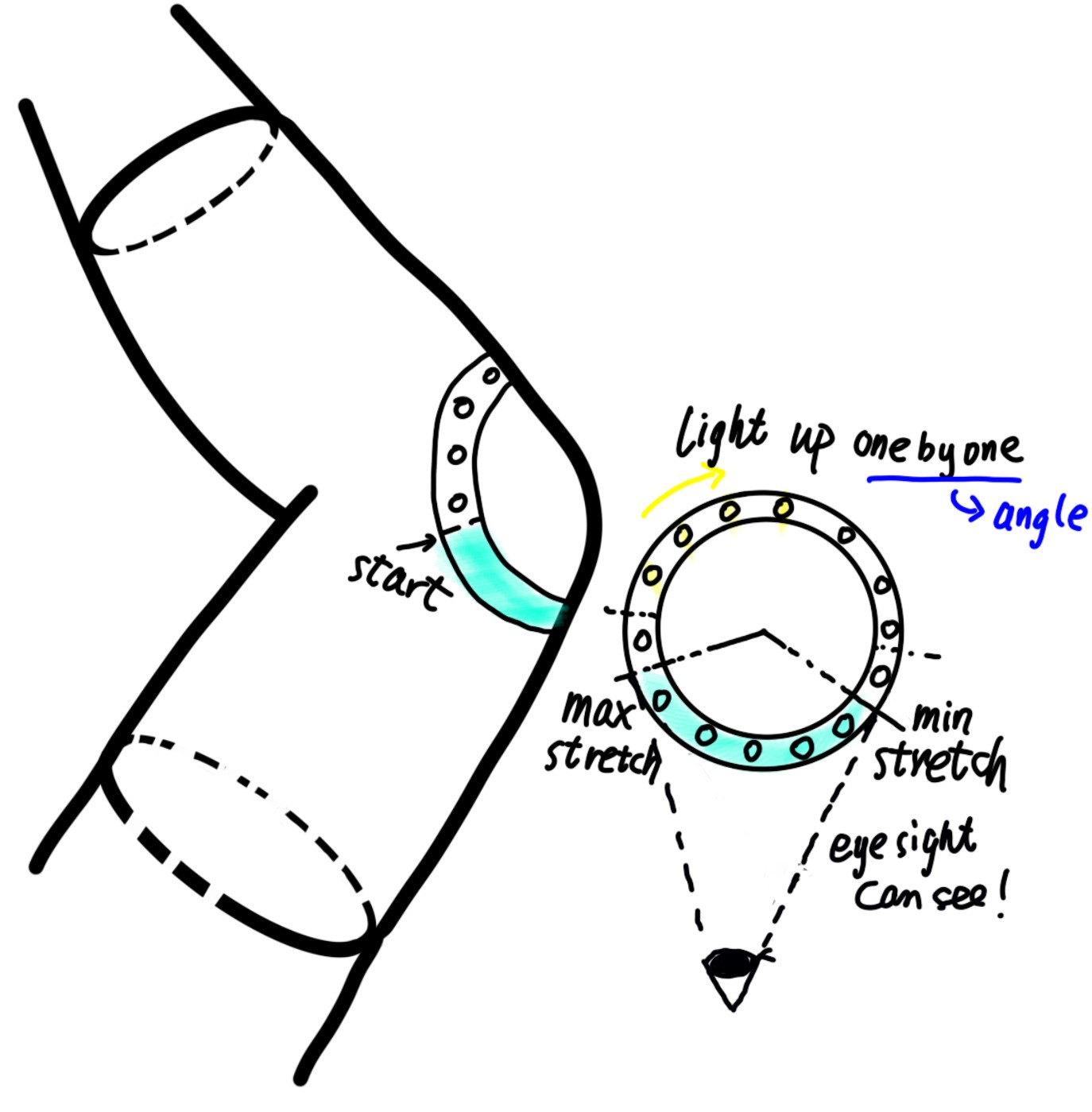
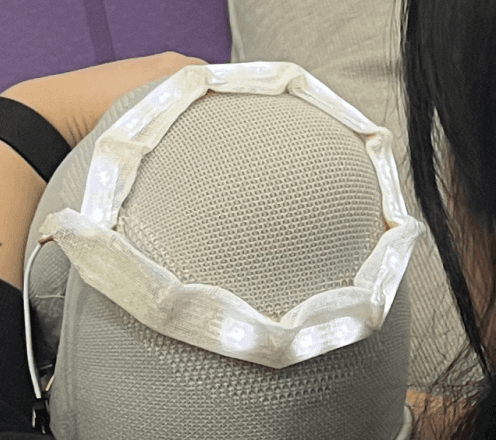
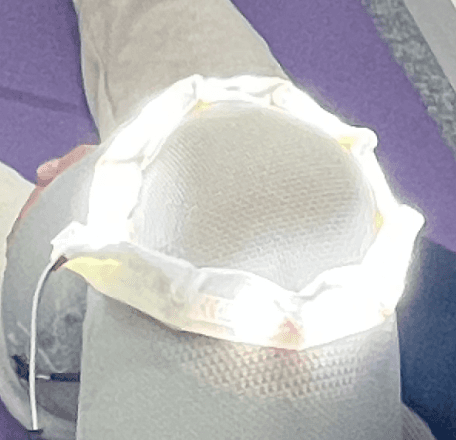
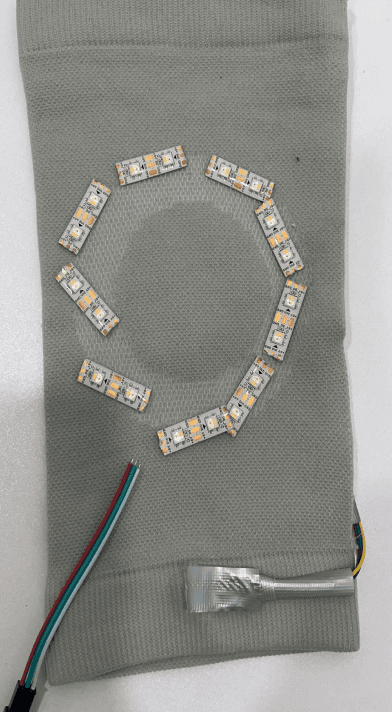
LED Position: around the knee area
Placing the light around the knee aims to prioritize rehabilitation, enhance movement perception, provide visual stimulation, and uniquely link breathing with joint movement for an engaging experience.

Bending to the minimum stretch
Passive stretching or active flexion
Static stretching or flexion
New record encouragement
Incentive for achieving the target

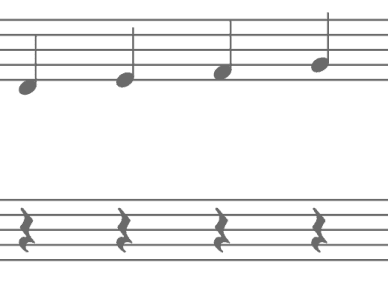
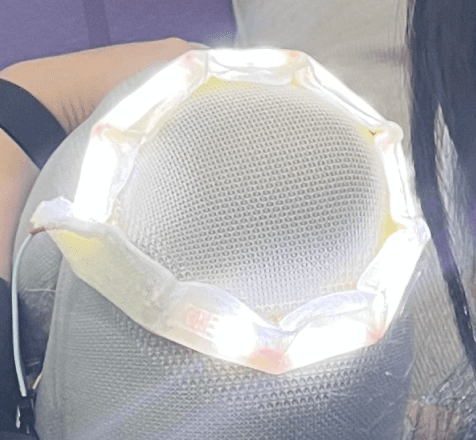

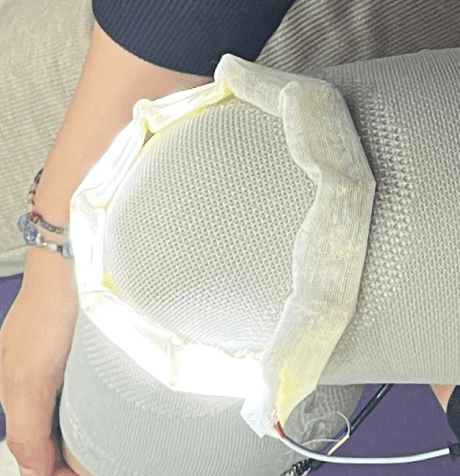
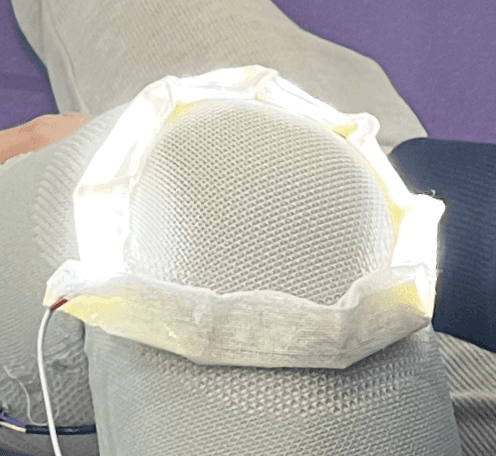
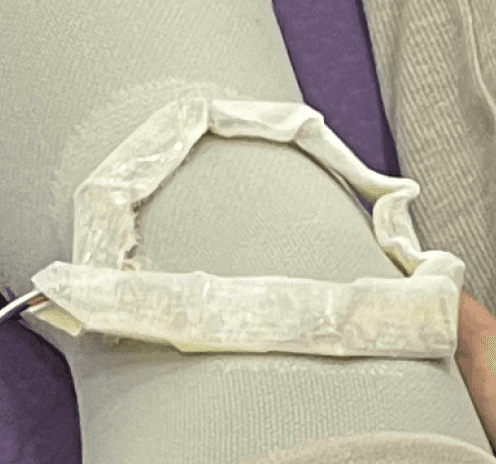
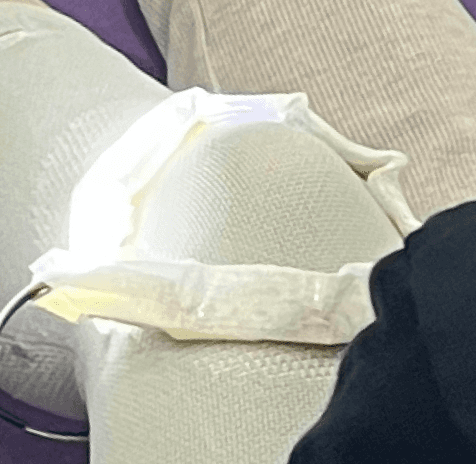
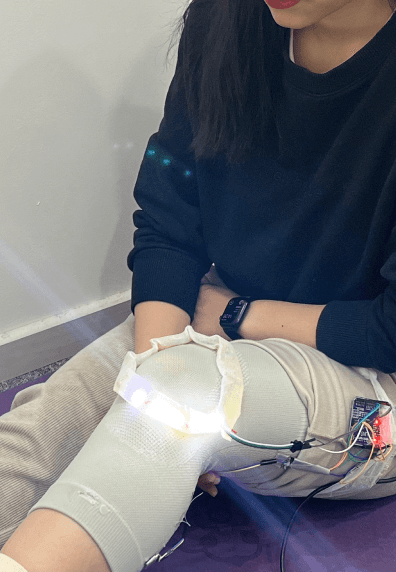
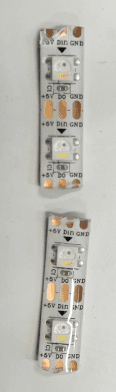
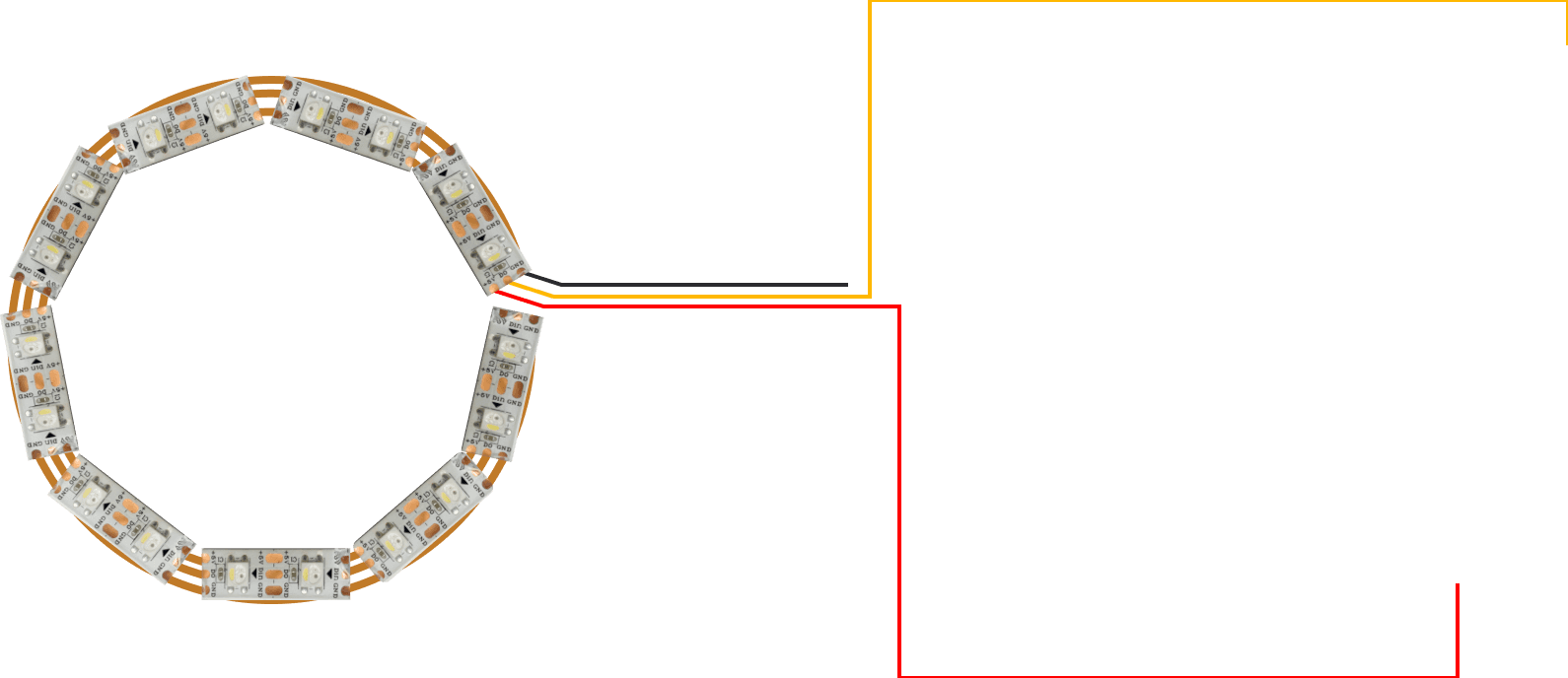
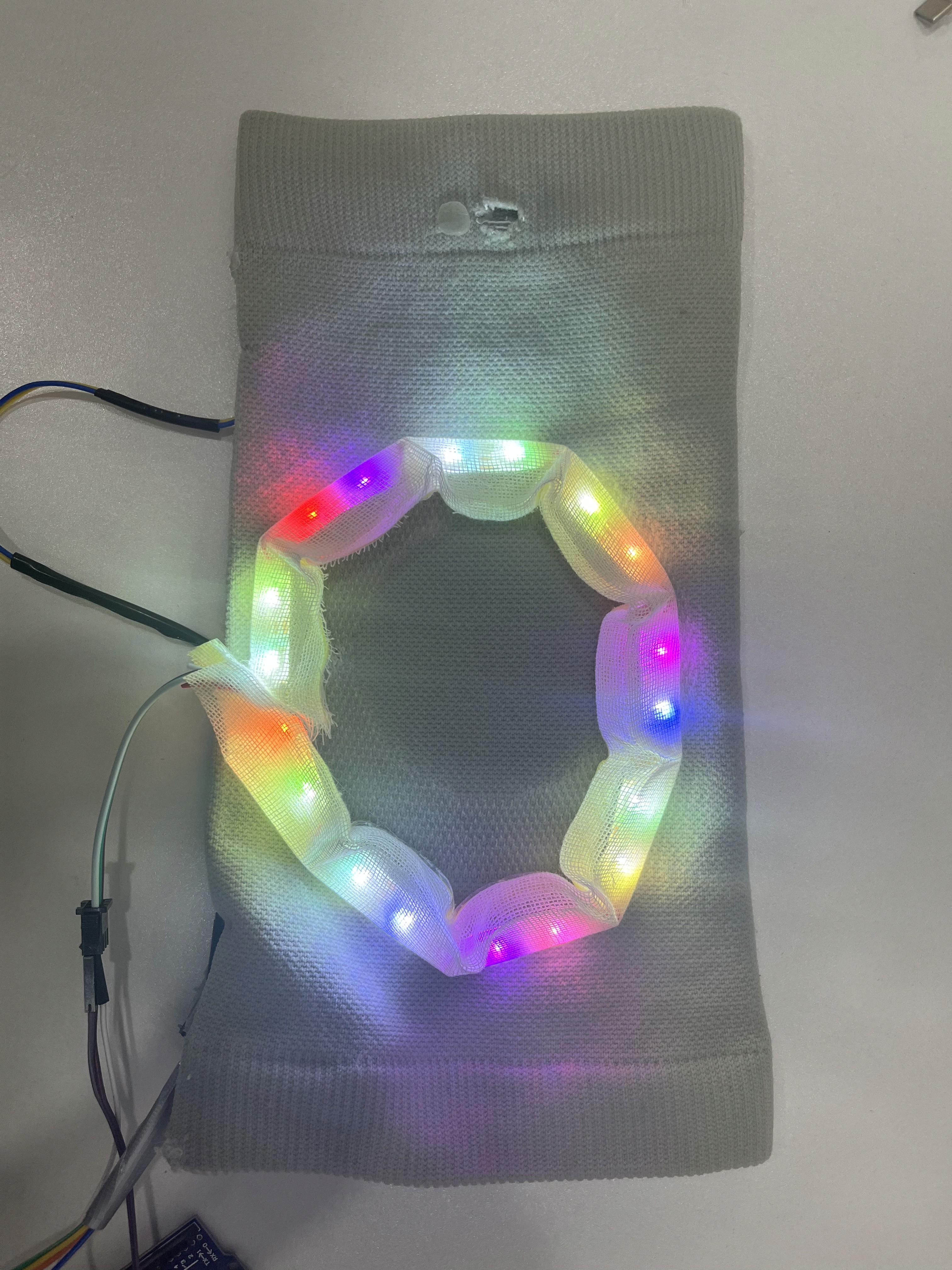
After the training begins, LEDs light up sequentially as the knee bends.
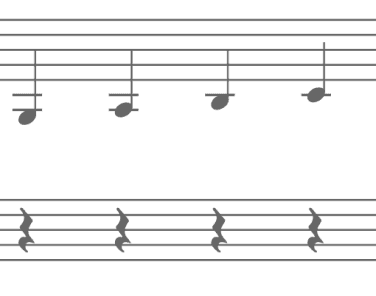
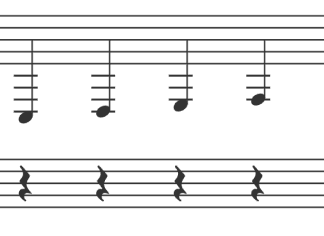
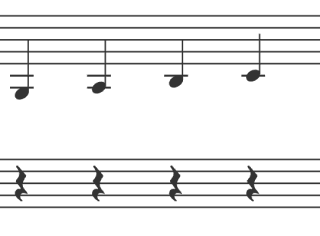
As the knee bends, the tone ascends from C4. Upon reaching the minimum stretch, the user hears C5.
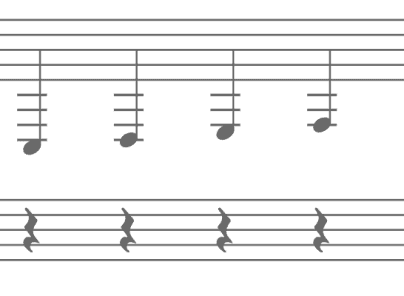
After reaching the minimum stretch, the user applies external force (or engages the muscles) to enhance the stretch, with LEDs sequentially lighting up, aligning with the ROM mapping.
The pitch continues to rise from C5 in accordance with the mapping to the ROM.
Movement feedback
Movement feedback
When unable to reach the target angle, lights flash to prompt user engagement; if stretching further is challenging, breath light effects assist in maintaining the ROM and alleviating discomfort.
When reaching the goal, there are specific melody and rainbow light effects as prompts
When achieving a new record, specific melody and lights signal success.
The music rhythm accelerates to encourage the user to bend further; when the user remains static, breath guidance sounds are introduced.
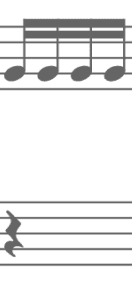
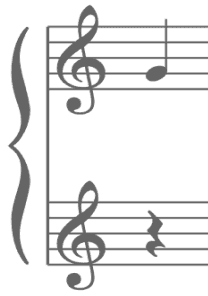
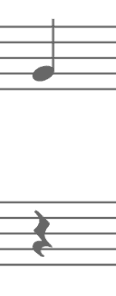
Movement feedback
Breathing guide

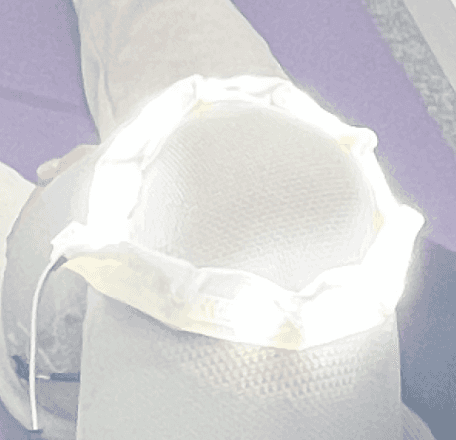
Key interactions



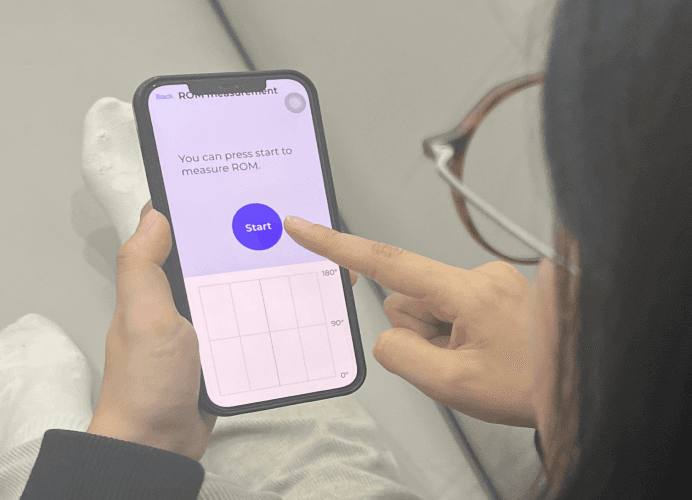
Demonstration
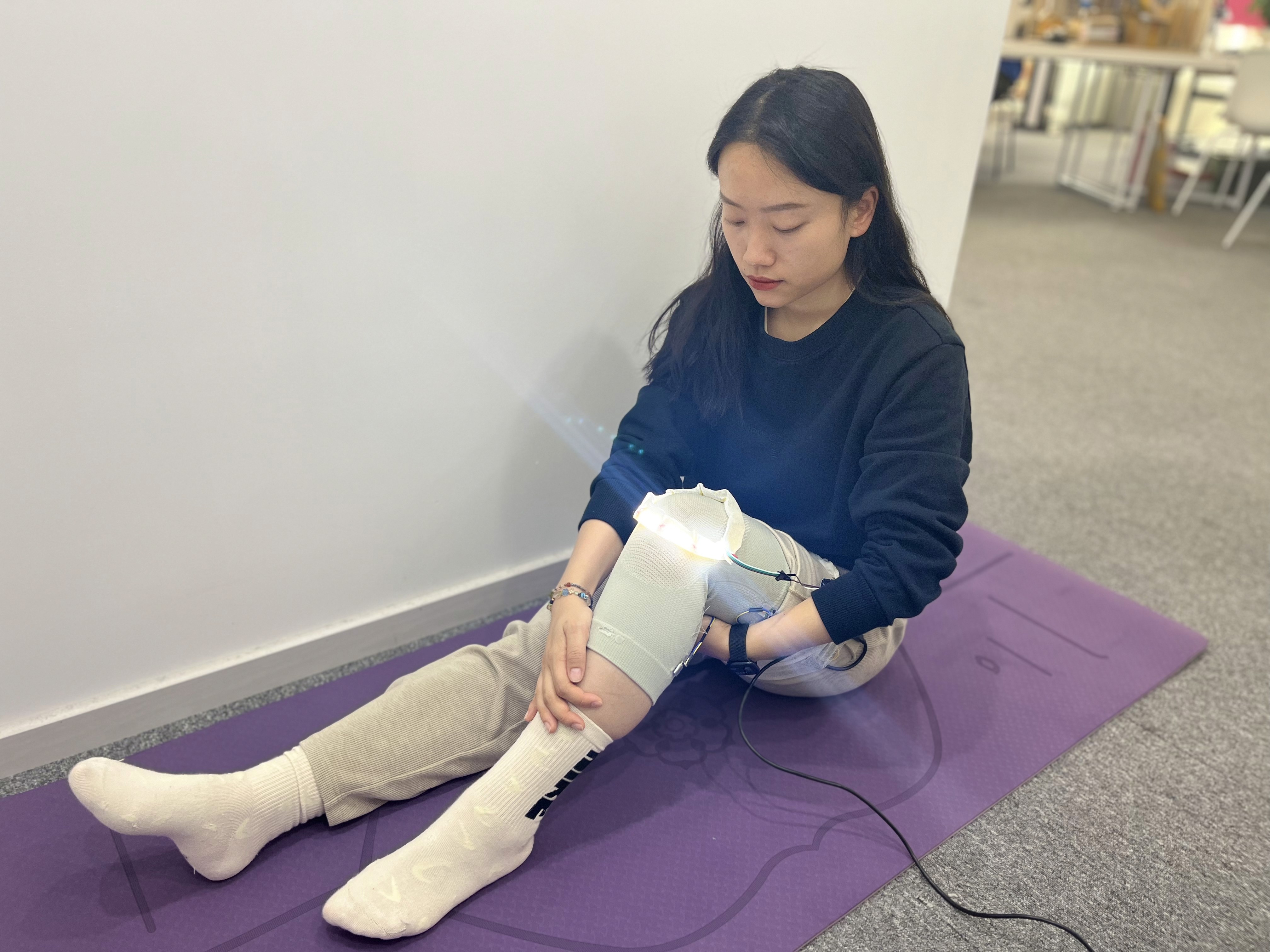
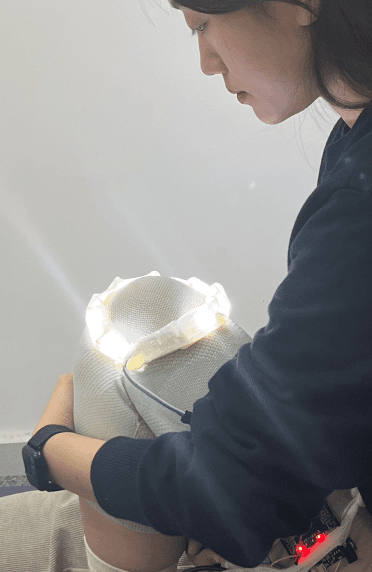
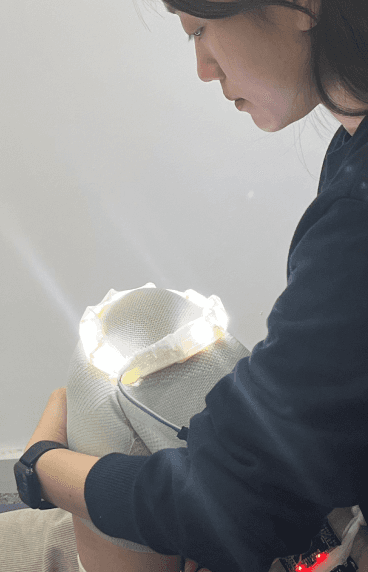
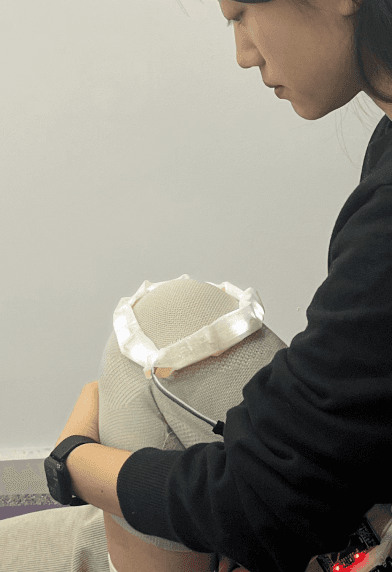
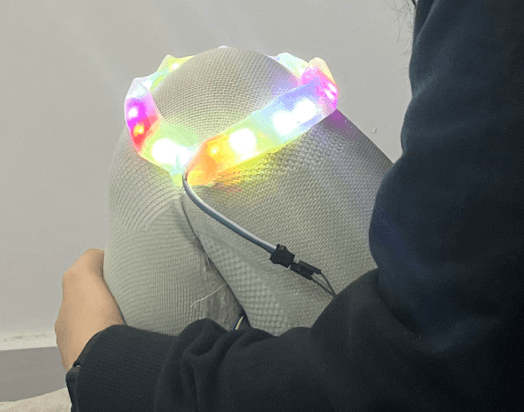
She easily uses the product for rehabilitation training and feels very confident!
The first success!
Milestones
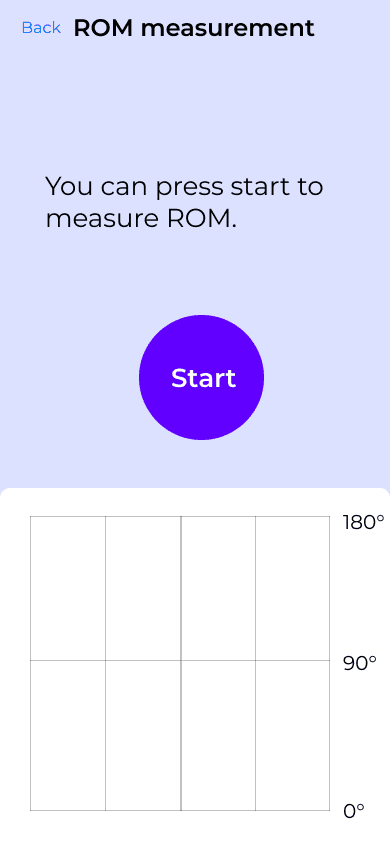
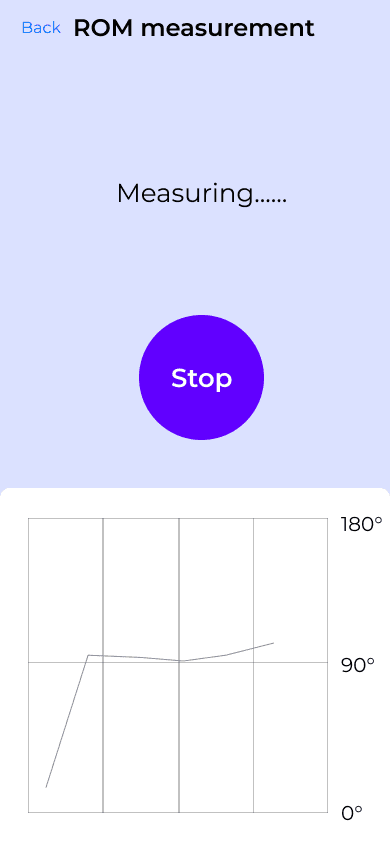
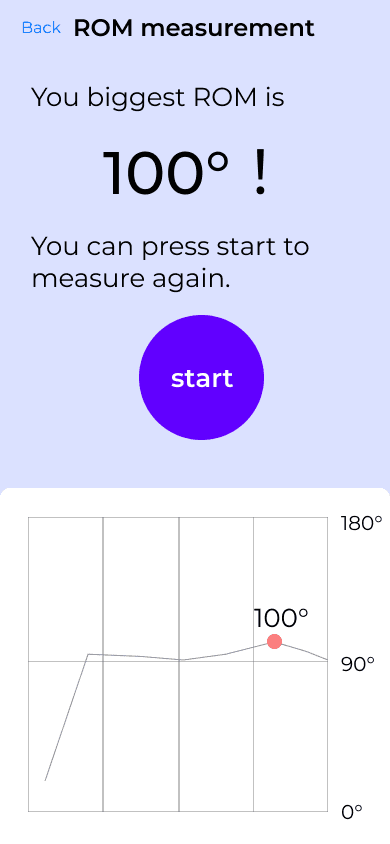
Measure the current angle that can reach.
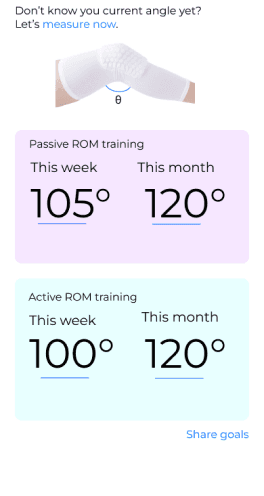
Set goal of today’s training.
After reaching the minimum amount of stretch, the user begins to apply external force to further deepen the stretch, and the pitch continues to rise from C5. The LEDs light up one by one.
The goal achieved, sound and light appear differently to encourage users.
When the user can't reach the target angle, the music rhythm accelerates, and lights flash rapidly, prompting the user to engage in breathing guidance through breath guidance sound and breath light effects.
Every time the user reaches a new record, she will be rewarded with music and light.
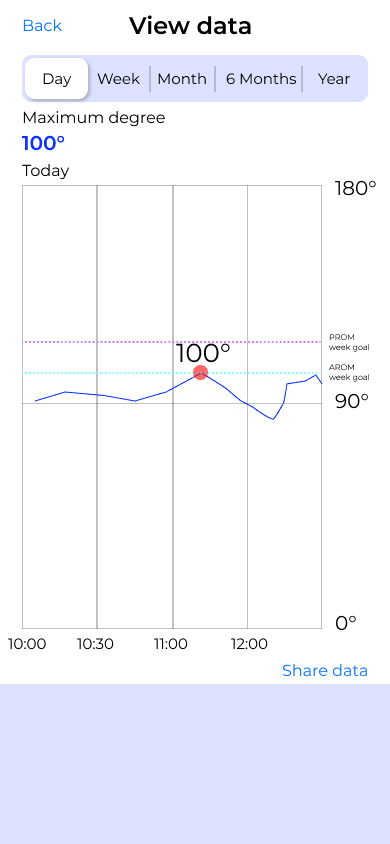
After the training is completed, the user can review the recent complete training situation.
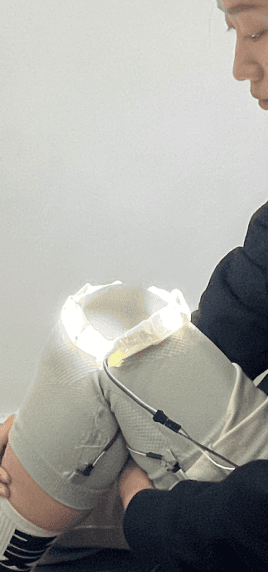
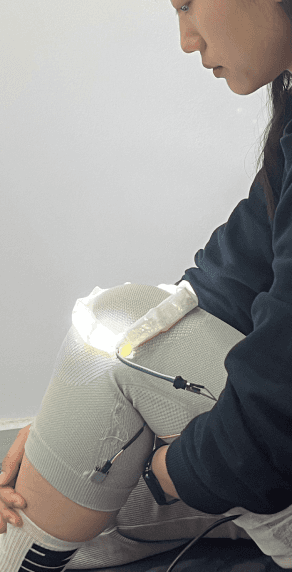
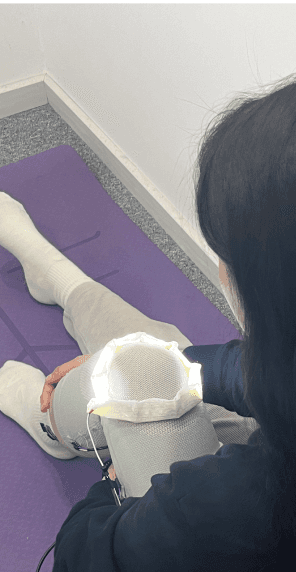
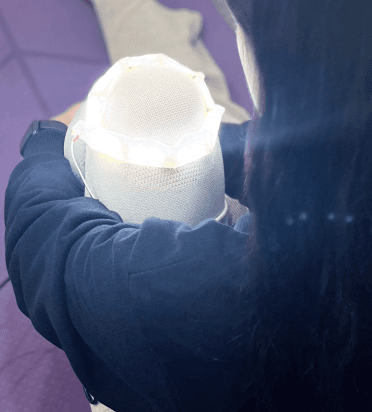
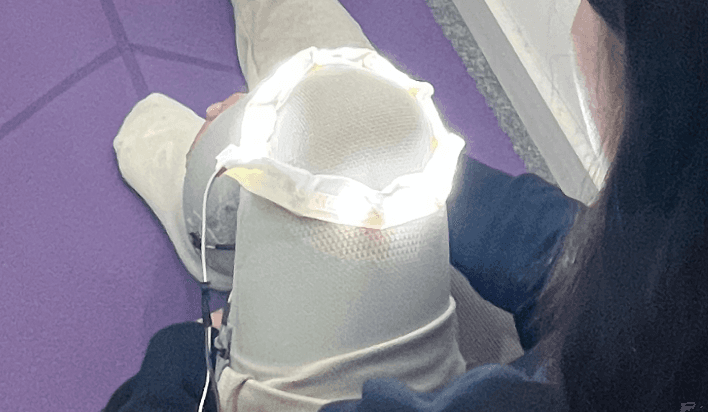

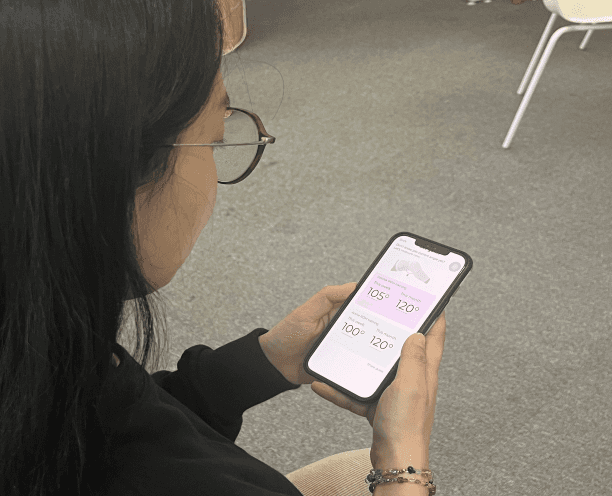
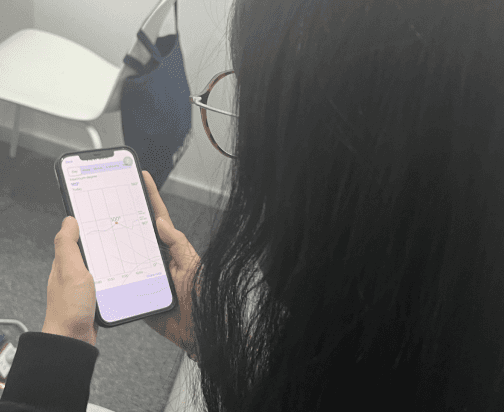
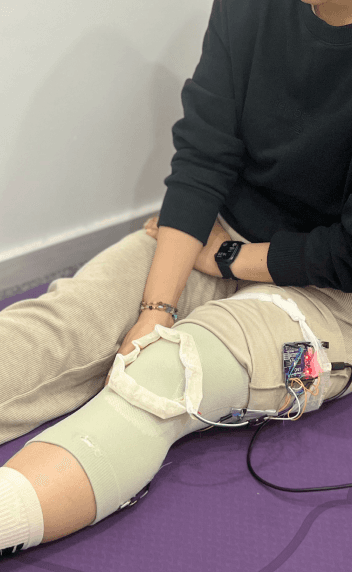
After training begins, as the knee bends, the tone rises from C4, with LEDs lighting sequentially. Upon reaching the minimum stretch measured in step 1, the user hears C5.

Fear & anxious
-> confident

Disappointed
-> Proud of achievement

Tedious
-> Attractive



🚩
🚩
uncertain
-> confirmed of
effectiveness


SDK
GND

Tech Logic: How to realise the interaction
Angle measurement Test
LED Strip
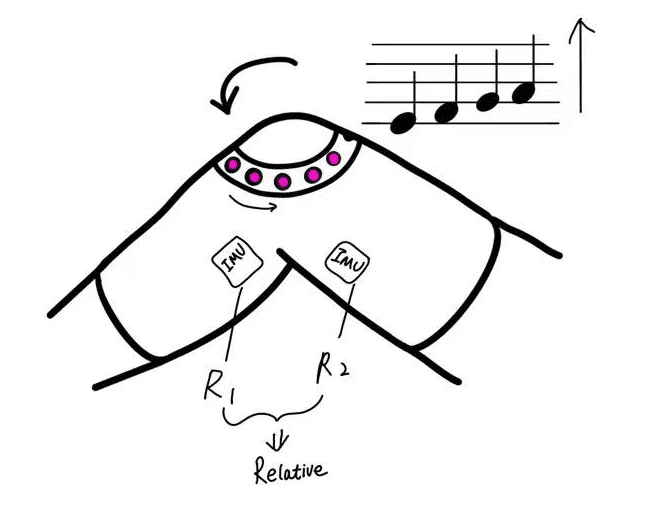
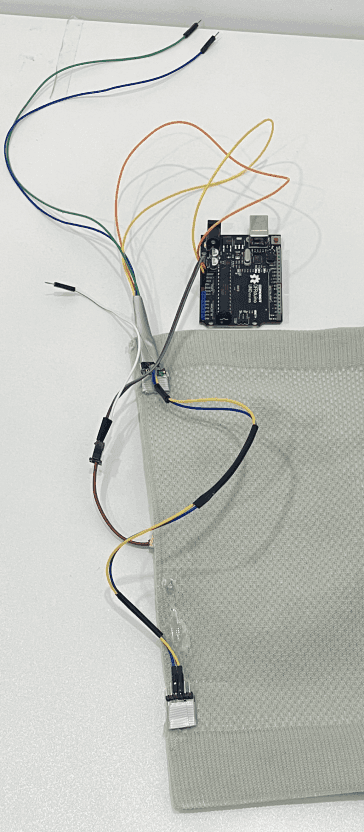
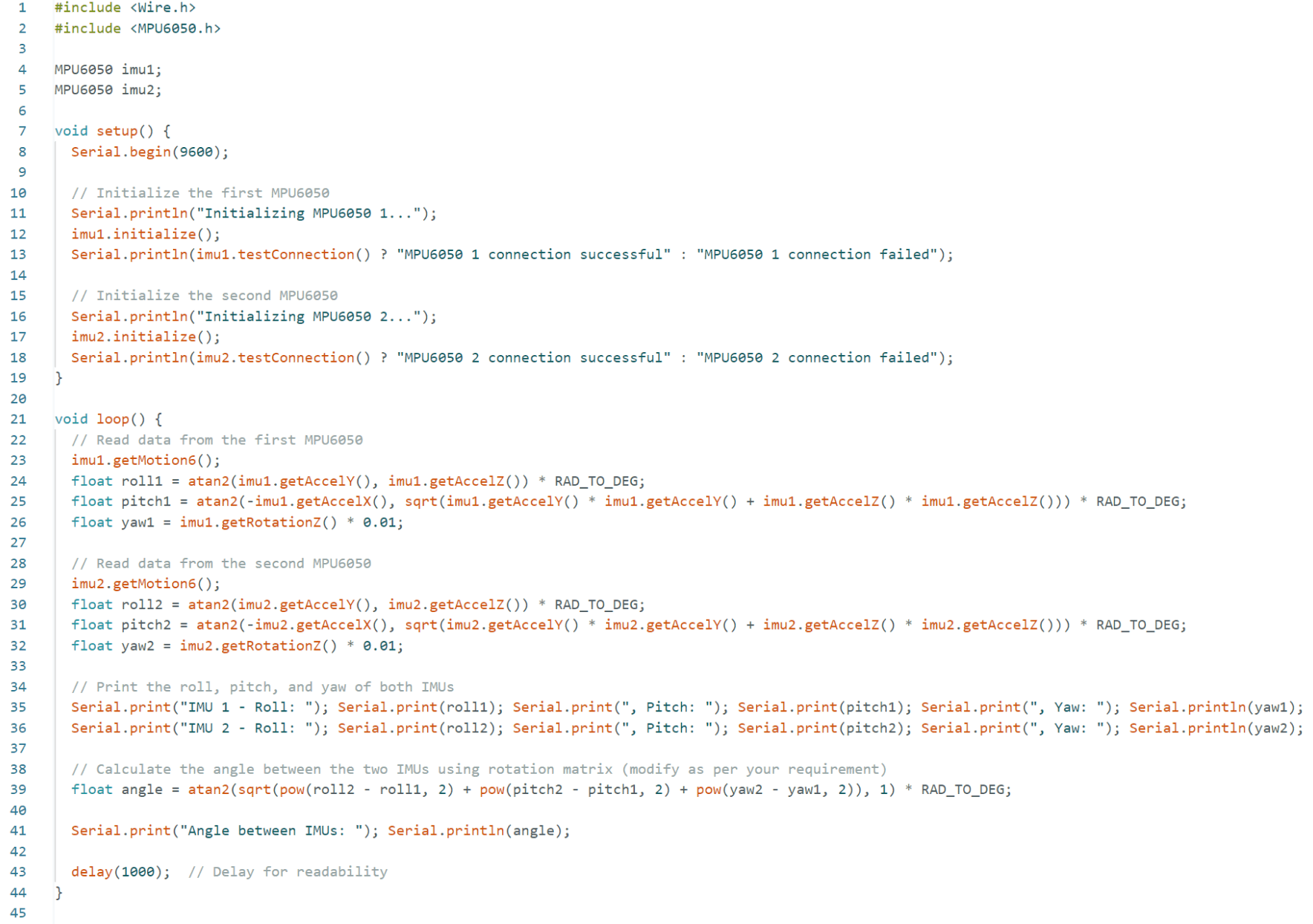
Securing IMUs on both the thigh and shin, I can calculate rotation matrices using obtained orientation angles (roll, pitch, yaw). These matrices are then employed to determine the angle between the thigh and shin.


R1
R2
Joint Angle
User test
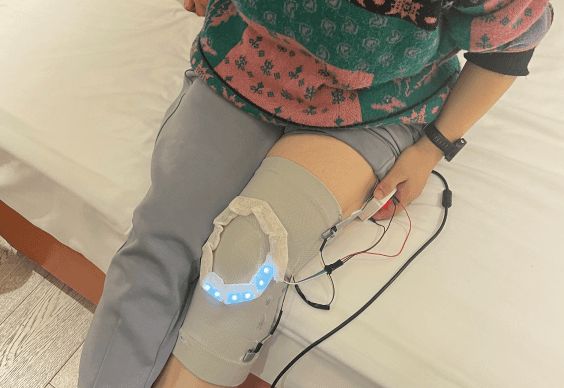
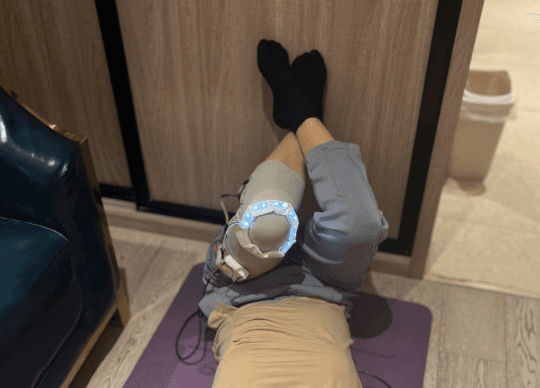
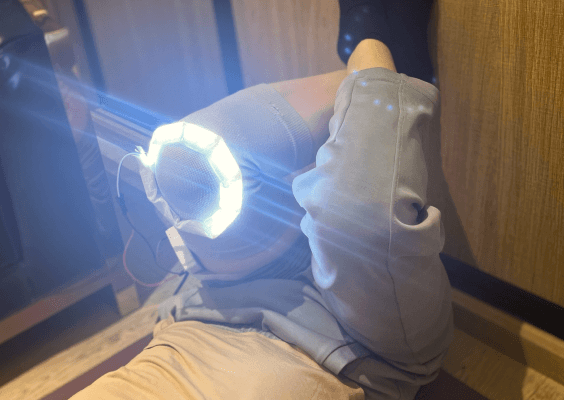
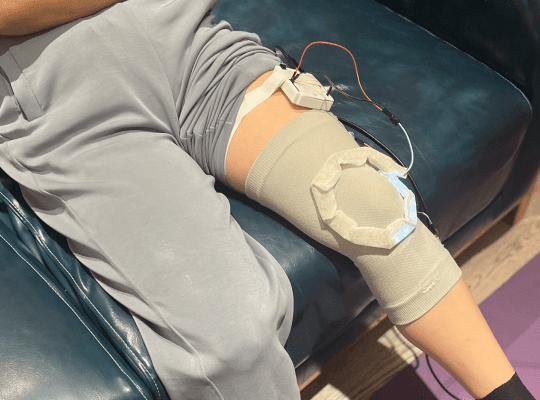
Test & feedback
Qing, 53, says “I can receive real-time feedback on my angle situation, and there is immediate feedback for any progress, which makes the training experience much better than before. ”
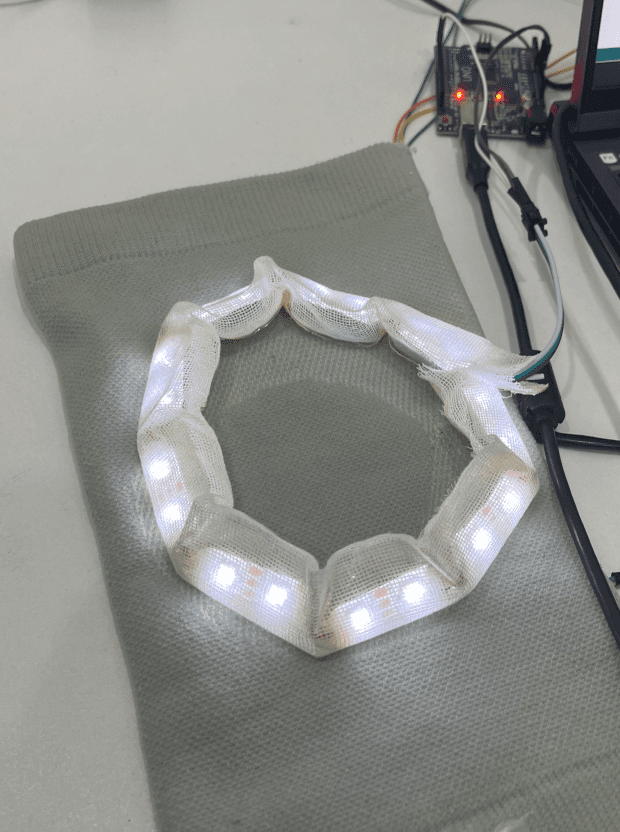
Qianyi, 40, says “The current prototype's light strip is not quite flexible. I hope to have a light strip that is more comfortable for wear, with a variety of music feedback options.”
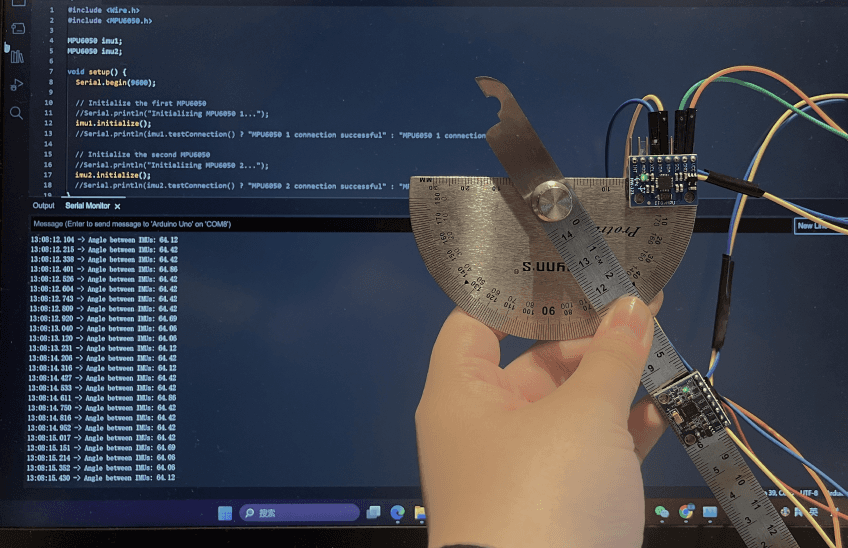
Testing
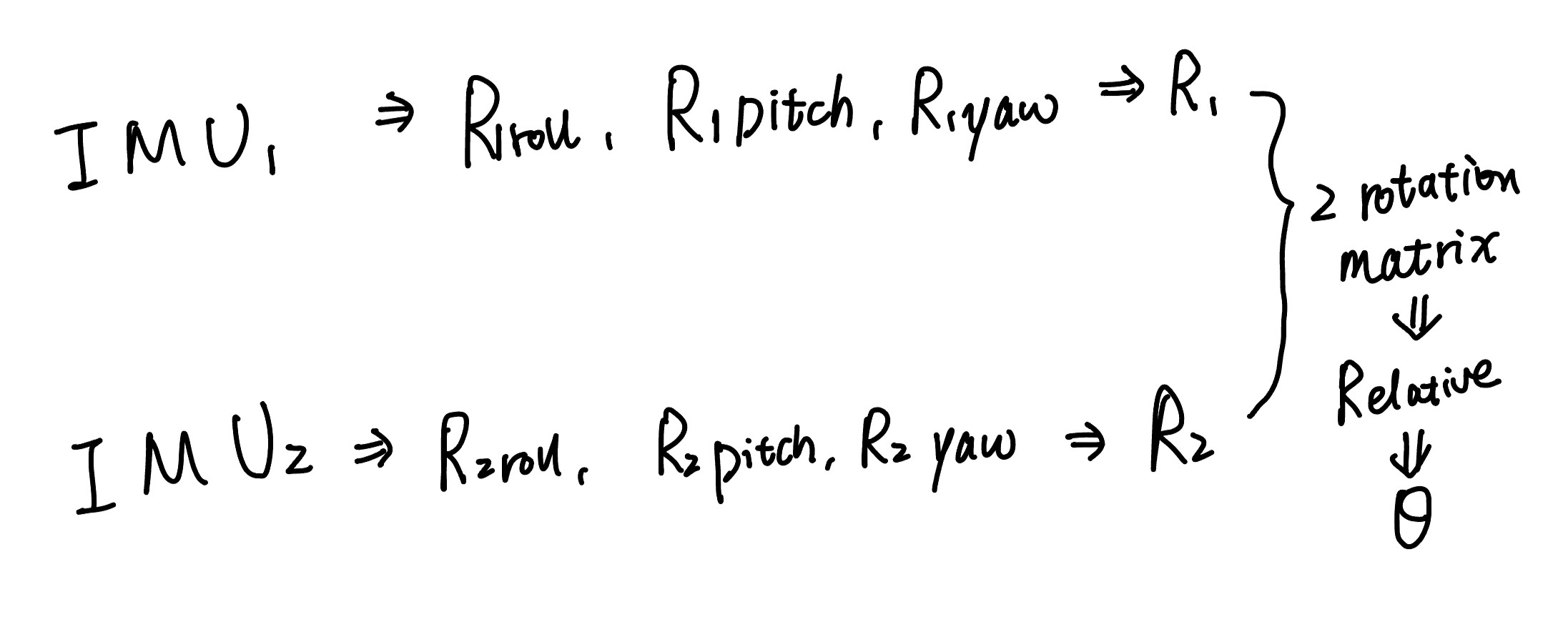
The fundamental idea