




Introduction

Team work

Duration

Tools

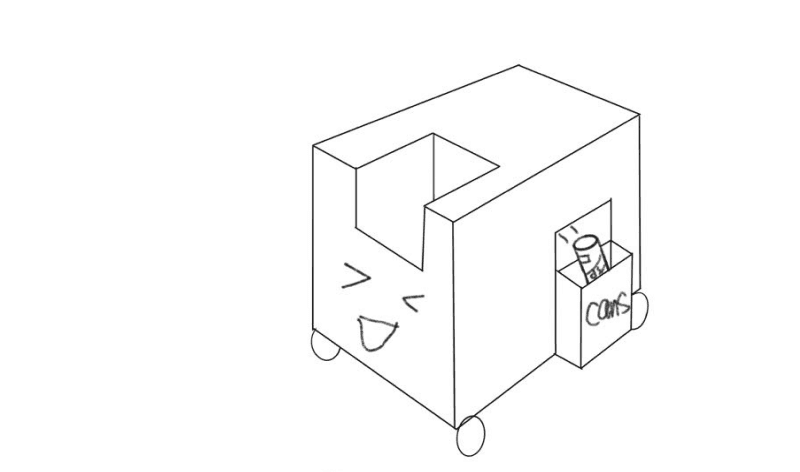
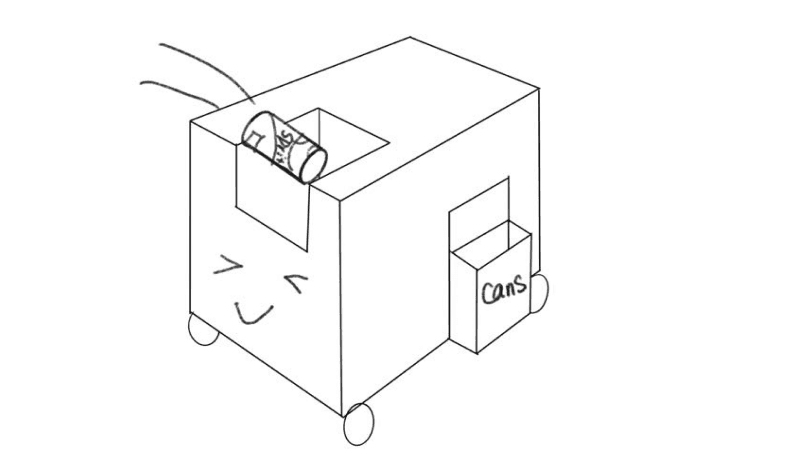
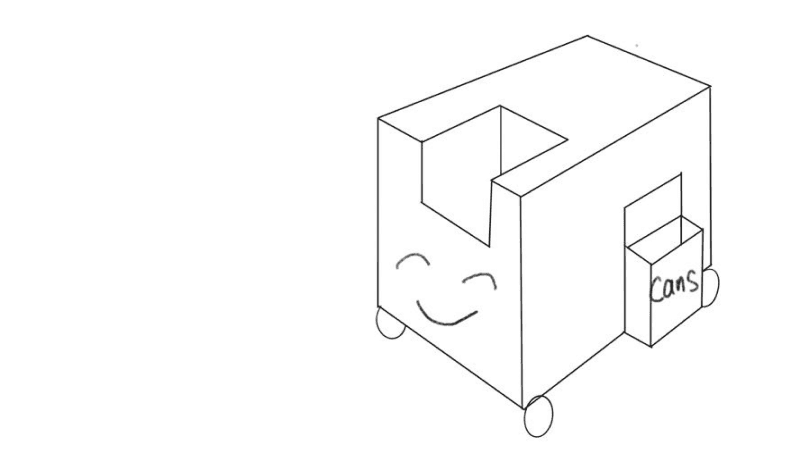
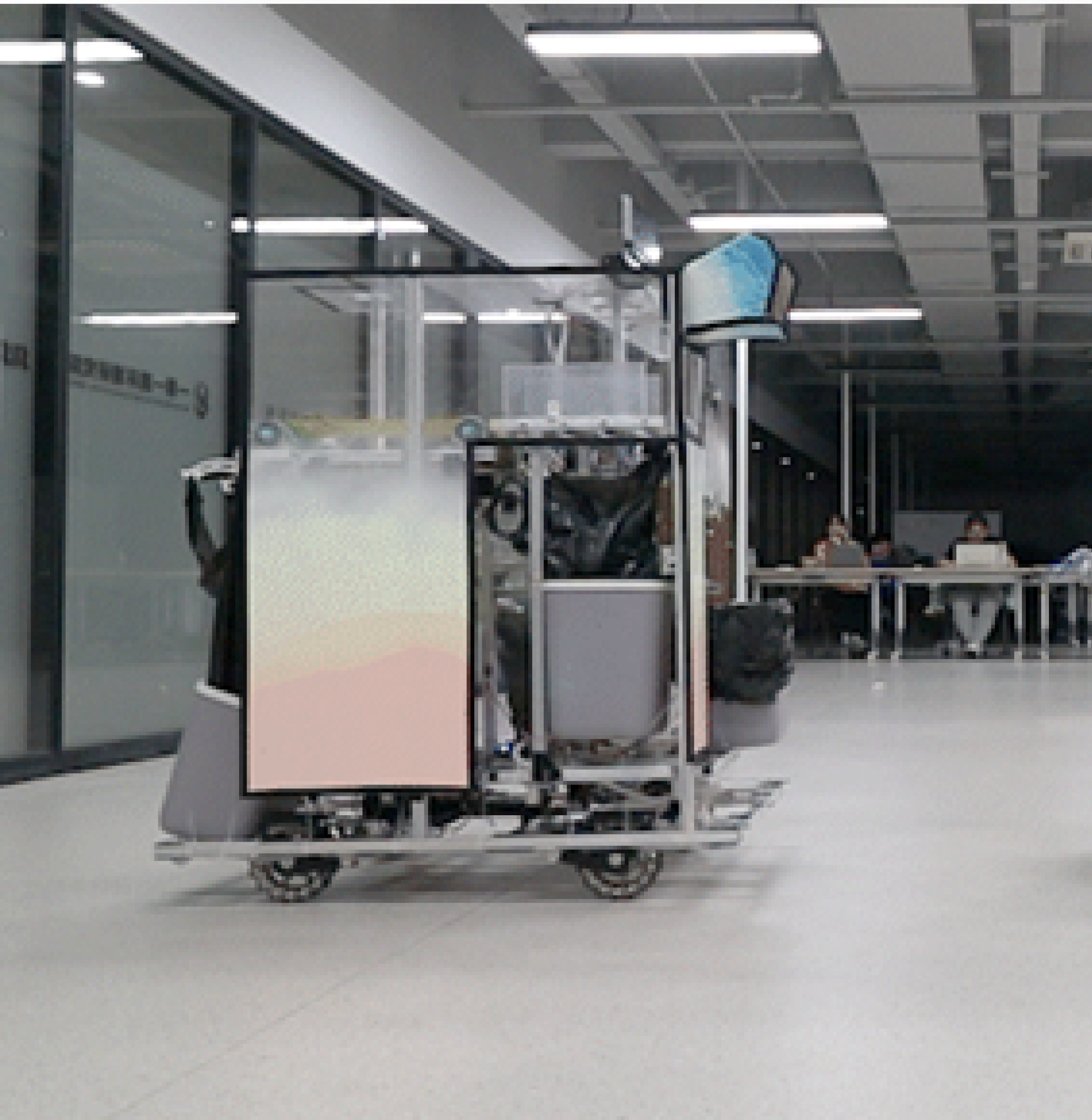
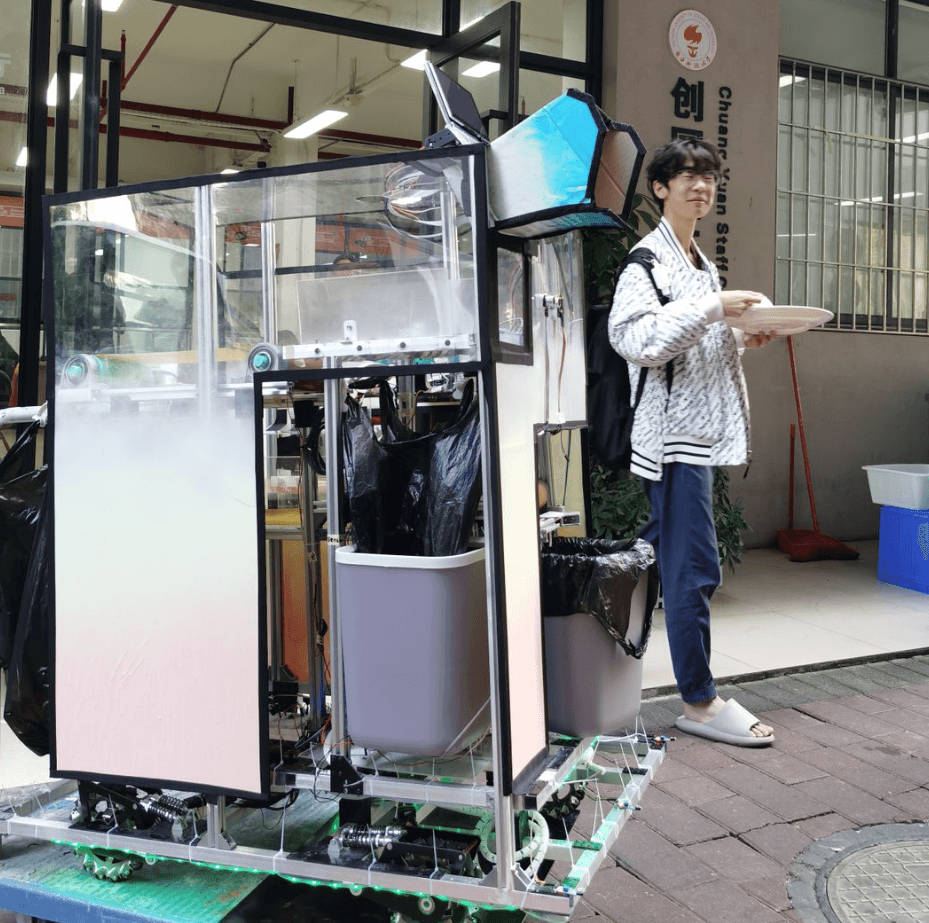
We've found non-compliance with garbage classification regulations, including the cafeteria at Southern University of Science and Technology. Through research, we identify structural issues and provide a practical solution: a demo of a waste sorting robot using mechanical and electronic technologies. This innovation helps cafeterias sort paper, milk cartons, aluminum cans, and plastic bottles effectively.

Project management

Team Collaboration

Product Design

Circuit Design

Programming

Mechanical System Design

CAD Modeling

Prototype Fabrication

9/20/2022 - 12/31/2022

Solidworks

Raspberry Pi

Opencv

Python

C++

"Other garbage" sorting robot

Introduction

Team work

Duration

Tools

We've found non-compliance with garbage classification regulations, including the cafeteria at Southern University of Science and Technology. Through research, we identify structural issues and provide a practical solution: a demo of a waste sorting robot using mechanical and electronic technologies. This innovation helps cafeterias sort paper, milk cartons, aluminum cans, and plastic bottles effectively.

Project management

Team Collaboration

Product Design

Circuit Design

Programming

Mechanical System Design

CAD Modeling

Prototype Fabrication

9/20/2022 - 12/31/2022

Solidworks

Raspberry Pi

Opencv

Python

C++

"Other garbage" sorting robot

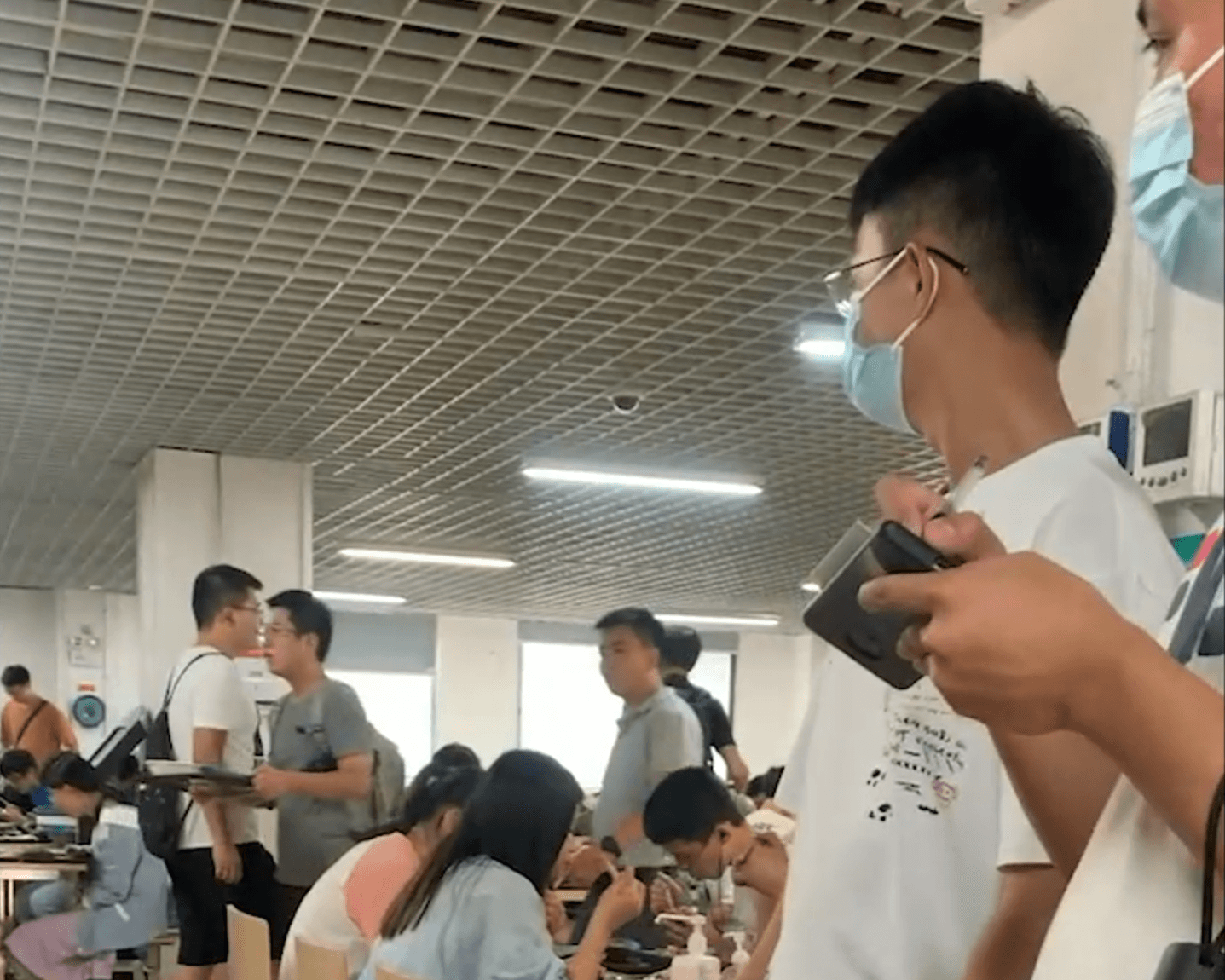
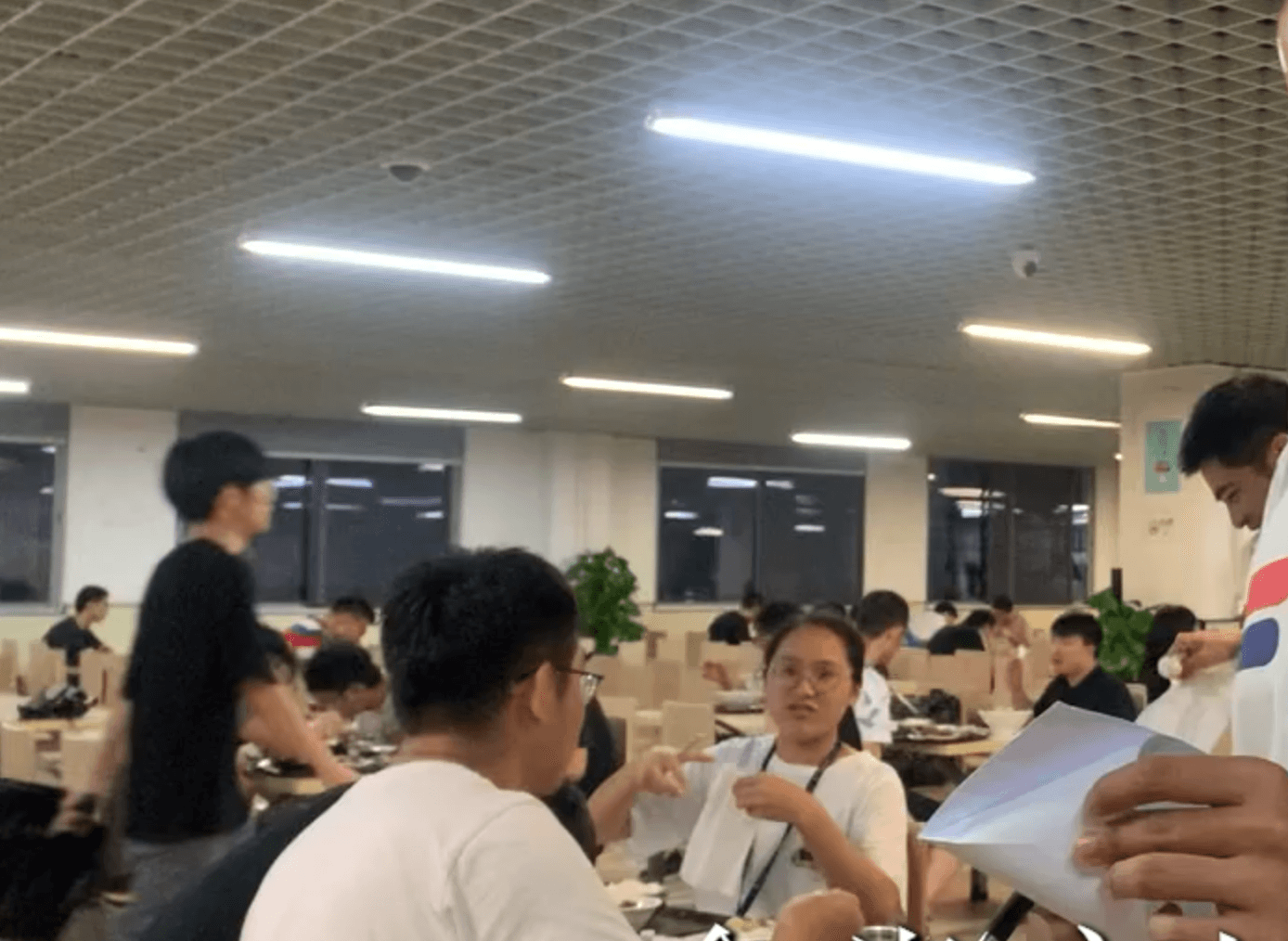
In order to know what kinds of garbage were put in the "other garbage" can during lunch and how many of them were respectively, we observed the litter litterers and their garbage in the school cafeteria from the beginning of lunch to the end of lunch for three consecutive days and counted them. The proportion of garbage in the "other garbage" can at noon are shown on the right.

The proportion of garbage in the "other garbage" can at noon

waste paper

62.63%

paper boxes

14.14%

plastic bottles

5.05%

cans

18.18%

Garbage quantity count

Research

Background

JOURNEY MAP: Waste generated during the entire process of eating in the cafeteria

happy

problems

sad

opportunities

stages

be on the way to canteen

Lineup to take food

Have lunch

Clean up the table

leave the canteen and rest

Have lessons

12:10

12:25

12:37

13:00

13:10

13:40

problems

Action

Action

Action

Action

Action

Action

problems

problems

problems

problems

Advance ordering service can be offered

Add service windows

Add a big screen to play students' favorite videos

Change the position of trash can

Replan the layout of the restaurant

Change the distribution of service Windows and seats

Removable trash can

Provide automatic sorting robots

Provide a lounge in the dining room

Increase the capacity of the school bus

Provide a lounge in the lecture building

Provide refreshing products

The trash can at the entrance to the cafeteria smells bad.

There are too many people at the entrance of the canteen.

There is a long wait in line.

watch a video

wait in line

Eat and Found the food delicious

drink coke

Take the paper napkin to wipe his mouth

Take the waste paper, plastic bottles to the trash can

carrying Plate and bowl

Wait in line to throw rubbish

Take the school bus back to the dormitory

Take a nap

Walking from the classroom to the canteen

thinking about what to eat

Take the school bus to the classroom

Have a class

The canteen is so crowded that you have to walk for a long time with your food to get to your seat.


It's inconvenient to have a lot of stuff on hand.

It's tiring to have to wait a long time to take out the garbage.

Sorting garbage is troublesome and time-consuming.

There is little time left for rest.

I'm tired of not having a good rest.

Garbage size measurement and total volume estimation)

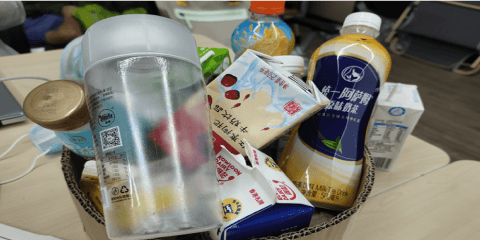
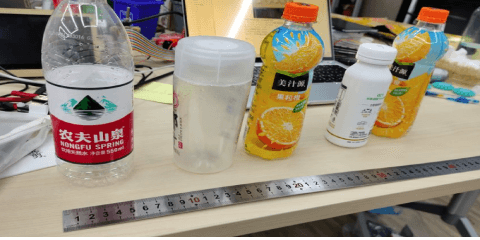
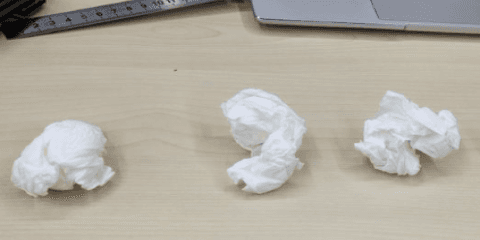
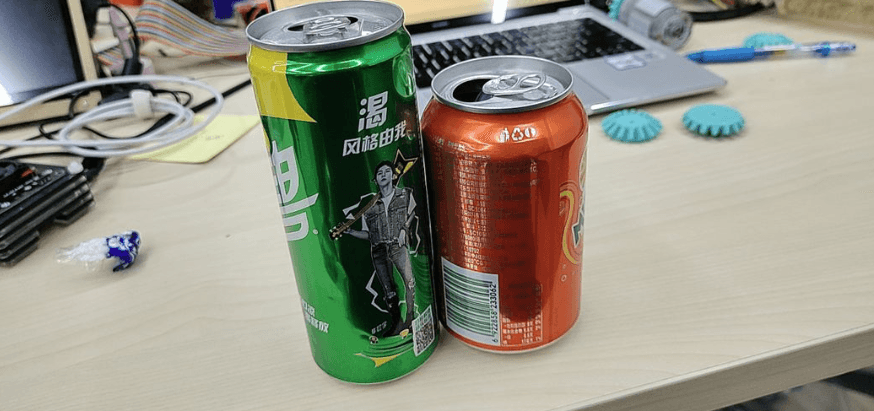
We took all kinds of waste in the "other garbage” can, measure their size and calculates the average volume each kind of garbage. Based on the average number of garbage in the "other garbage" can at noon, we estimate the total volume of the four types of garbage that can be generated at noon, and the results are shown on the right.

About 35 liters

About 7.5 liters

About 13 liters

About 17 liters

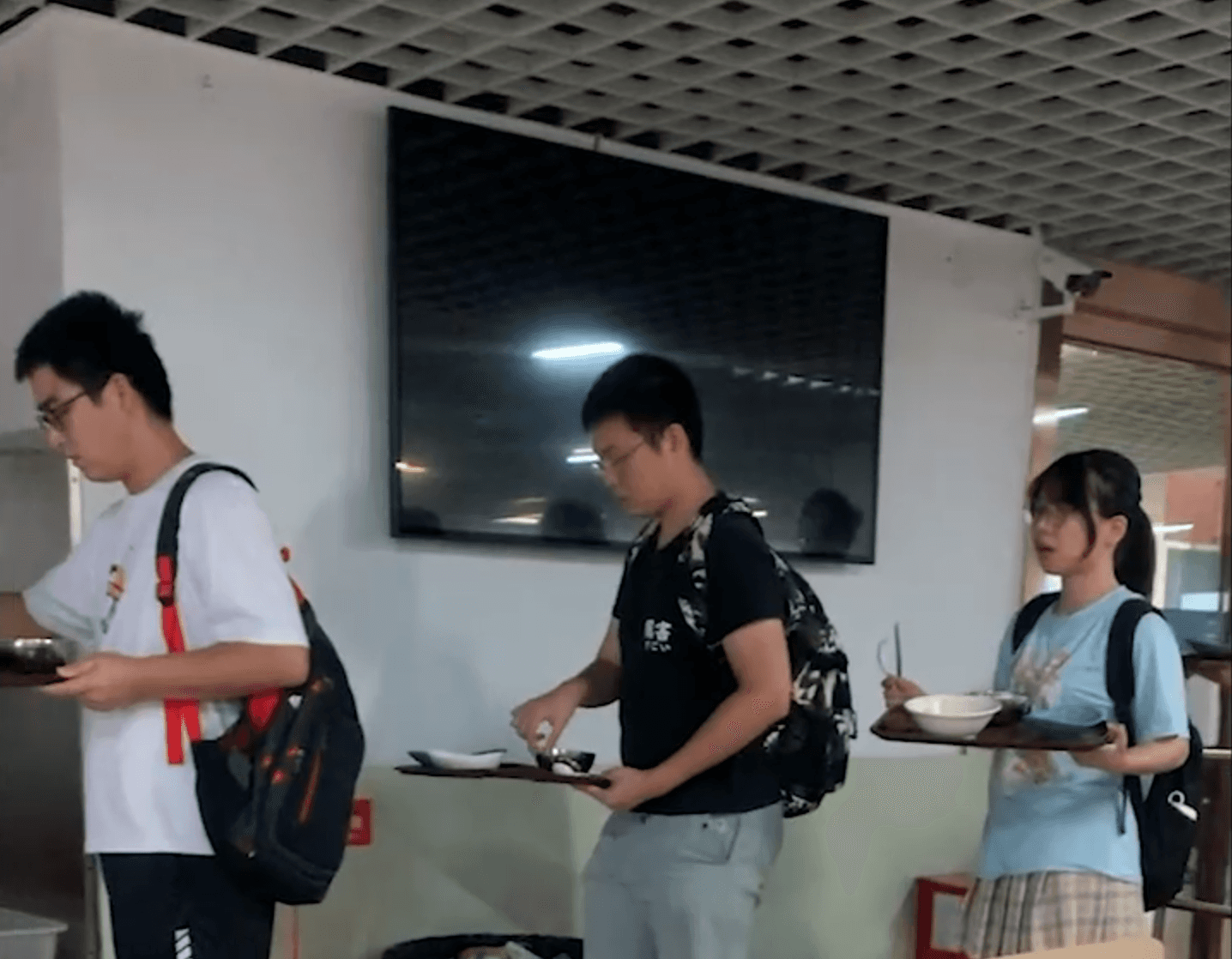
Every morning, noon and evening thousands of people eat in the school canteen, which produces a lot of garbage. Although there are many garbage cans in the canteen, there is no "recyclable" garbage can set up in the canteen. Waste paper, paper boxes, plastic bottles and cans are thrown into other garbage bins. Many metal and plastic materials that can be recycled are not separated. Where does the garbage in the "Other garbage" can go? Will the recyclable materials in the canisters be discarded along with the scrap paper, or will they be recycled? Why not set up the "recycling bin" according to the regulation? What's the problem? What's behind it? We began an in-depth investigation.

In order to know what kinds of garbage were put in the "other garbage" can during lunch and how many of them were respectively, we observed the litter litterers and their garbage in the school cafeteria from the beginning of lunch to the end of lunch for three consecutive days and counted them. The proportion of garbage in the "other garbage" can at noon are shown on the right.

The proportion of garbage in the "other garbage" can at noon

waste paper

62.63%

paper boxes

14.14%

plastic bottles

5.05%

cans

18.18%

Garbage quantity count

Research

Background

JOURNEY MAP: Waste generated during the entire process of eating in the cafeteria

happy

problems

sad

opportunities

stages

be on the way to canteen

Lineup to take food

Have lunch

Clean up the table

leave the canteen and rest

Have lessons

12:10

12:25

12:37

13:00

13:10

13:40

problems

Action

Action

Action

Action

Action

Action

problems

problems

problems

problems

Advance ordering service can be offered

Add service windows

Add a big screen to play students' favorite videos

Change the position of trash can

Replan the layout of the restaurant

Change the distribution of service Windows and seats

Removable trash can

Provide automatic sorting robots

Provide a lounge in the dining room

Increase the capacity of the school bus

Provide a lounge in the lecture building

Provide refreshing products

The trash can at the entrance to the cafeteria smells bad.

There are too many people at the entrance of the canteen.

There is a long wait in line.

watch a video

wait in line

Eat and Found the food delicious

drink coke

Take the paper napkin to wipe his mouth

Take the waste paper, plastic bottles to the trash can

carrying Plate and bowl

Wait in line to throw rubbish

Take the school bus back to the dormitory

Take a nap

Walking from the classroom to the canteen

thinking about what to eat

Take the school bus to the classroom

Have a class

The canteen is so crowded that you have to walk for a long time with your food to get to your seat.


It's inconvenient to have a lot of stuff on hand.

It's tiring to have to wait a long time to take out the garbage.

Sorting garbage is troublesome and time-consuming.

There is little time left for rest.

I'm tired of not having a good rest.

Garbage size measurement and total volume estimation)

We took all kinds of waste in the "other garbage” can, measure their size and calculates the average volume each kind of garbage. Based on the average number of garbage in the "other garbage" can at noon, we estimate the total volume of the four types of garbage that can be generated at noon, and the results are shown on the right.

About 35 liters

About 7.5 liters

About 13 liters

About 17 liters

Every morning, noon and evening thousands of people eat in the school canteen, which produces a lot of garbage. Although there are many garbage cans in the canteen, there is no "recyclable" garbage can set up in the canteen. Waste paper, paper boxes, plastic bottles and cans are thrown into other garbage bins. Many metal and plastic materials that can be recycled are not separated. Where does the garbage in the "Other garbage" can go? Will the recyclable materials in the canisters be discarded along with the scrap paper, or will they be recycled? Why not set up the "recycling bin" according to the regulation? What's the problem? What's behind it? We began an in-depth investigation.

PROBLEM STATEMENT

Problem analysis

Insight

How might we create a product that enables students to easily and quickly sort paper waste, milk cartons, aluminum cans, and plastic bottles, while also providing a meaningful and enjoyable experience?

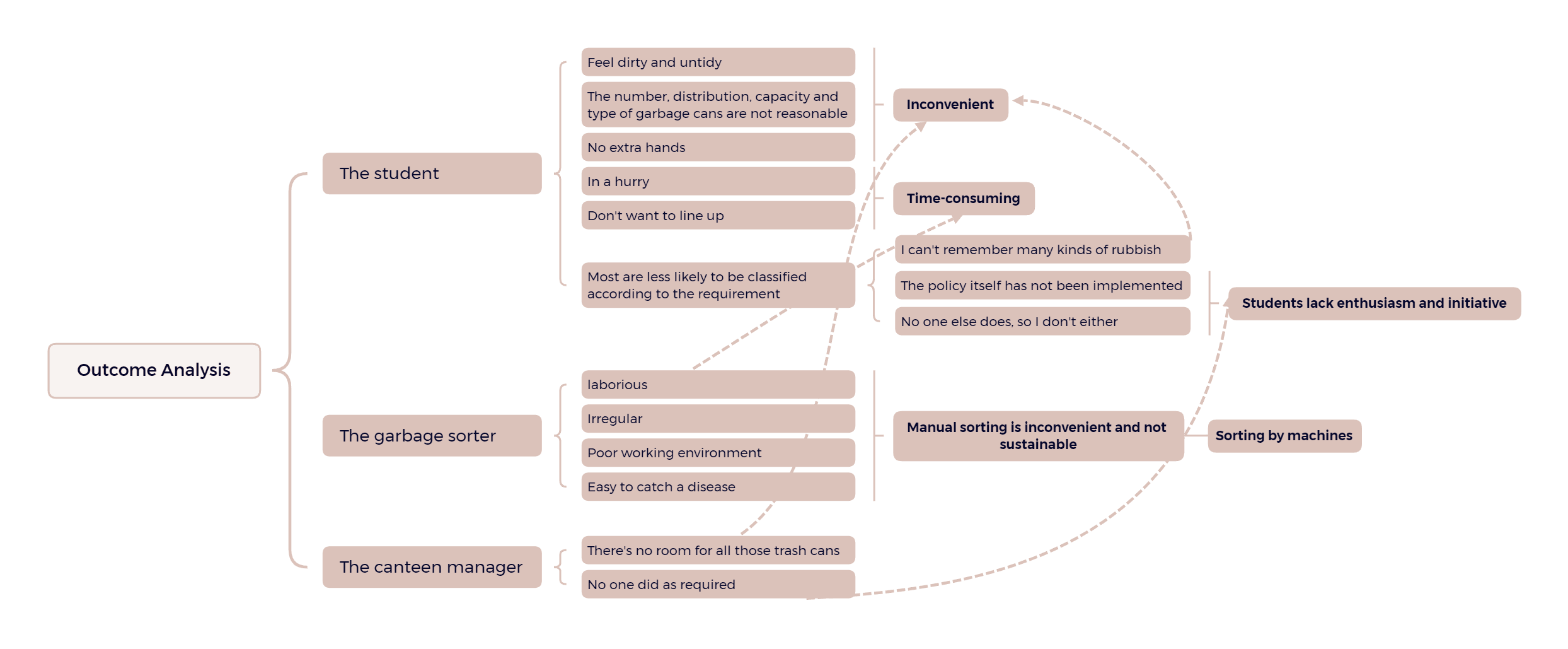
The current garbage sorting process is inconvenient, time-consuming, and demotivating.

SYSTEM MAP
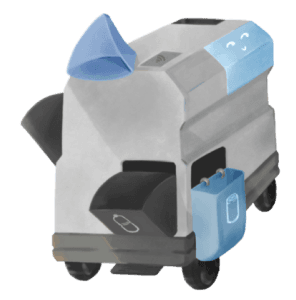
Garbage entrance

Reach

Automatic separation

Automatic separation

Automatic separation

can

plastic

bottle

waste paper

waste box

STORYBOARD
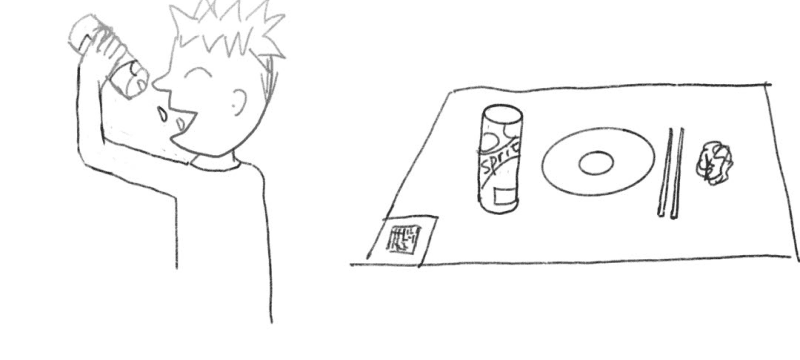
Tom finished eating and prepared to clean up the garbage.

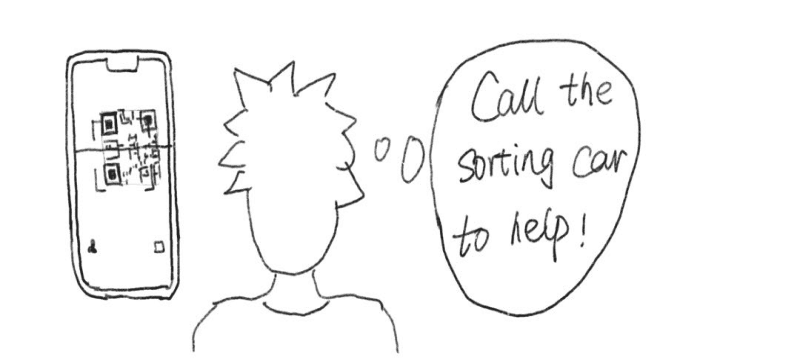
He scanned the QR code to summon the car.

The car swerved around obstacles and pedestrians to reach him

He threw everything except kitchen waste and cutlery into the slot of his car.

The car began to sort itself.

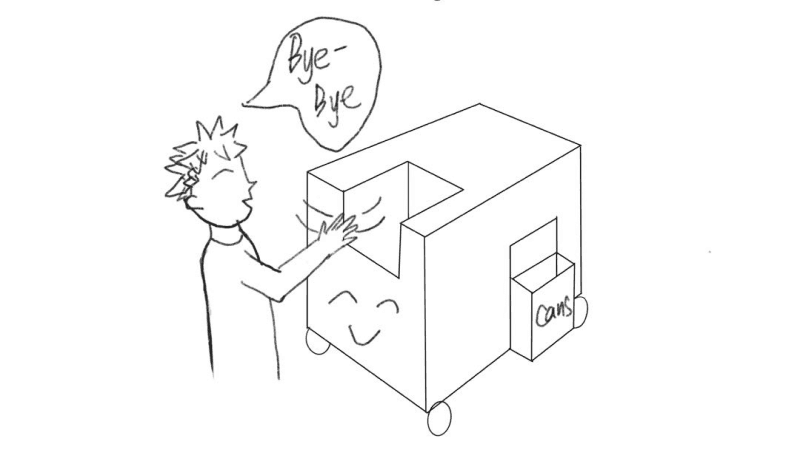
Tom waves his hand and the car moves away.

applet

product

Users
PROTOTYPE and test

entrance

Waste paper separation module

Can separation module
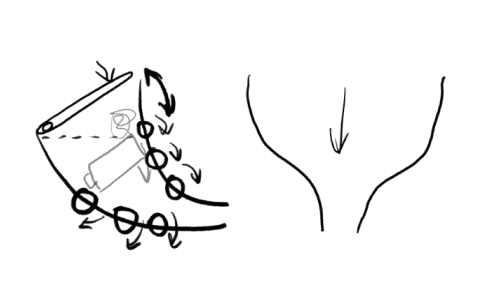
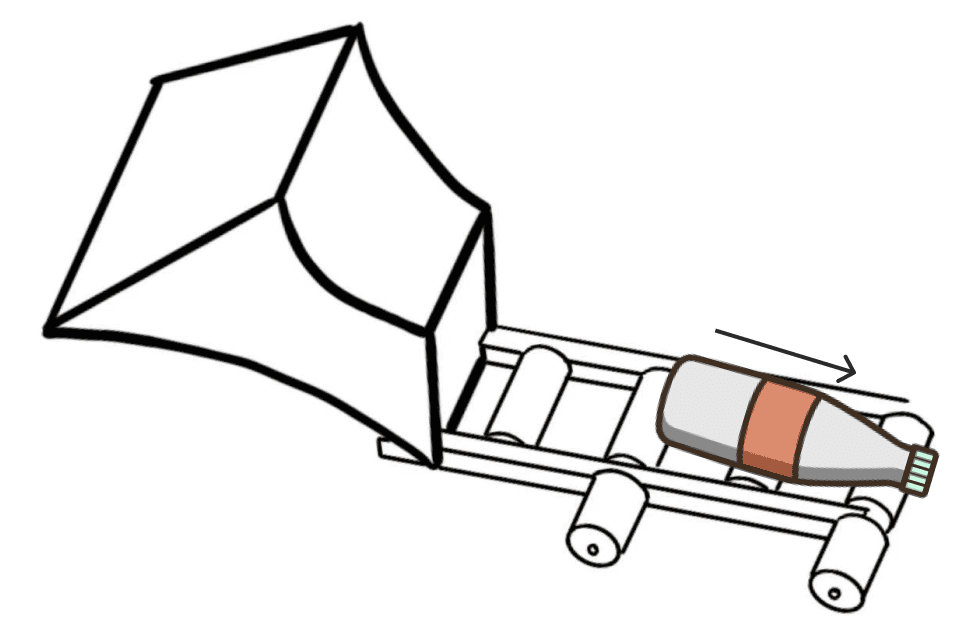
The shape of the entrance allows garbage to enter in the same direction.

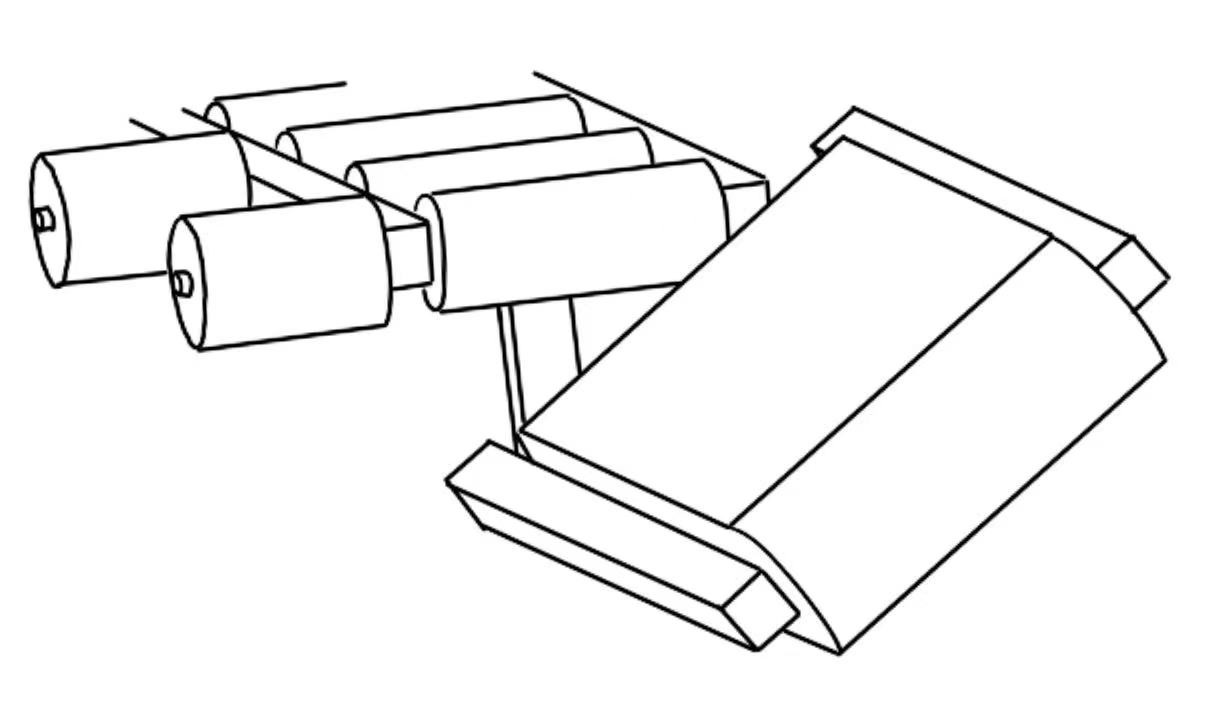
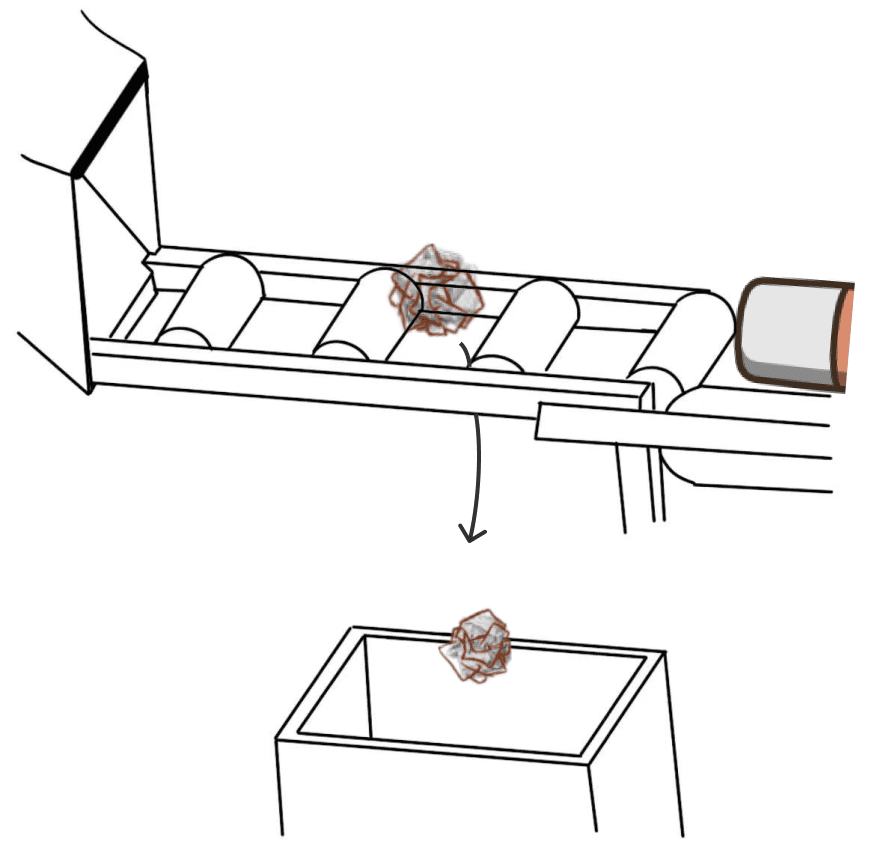
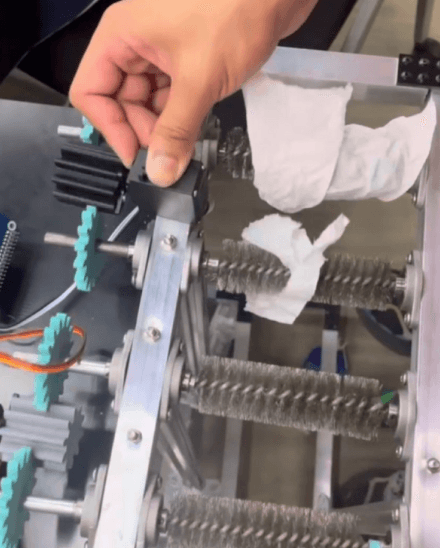
An aluminum roller brush pulls waste paper into the trash bin below, and three other types of waste are fed to the next module.

carton separation module

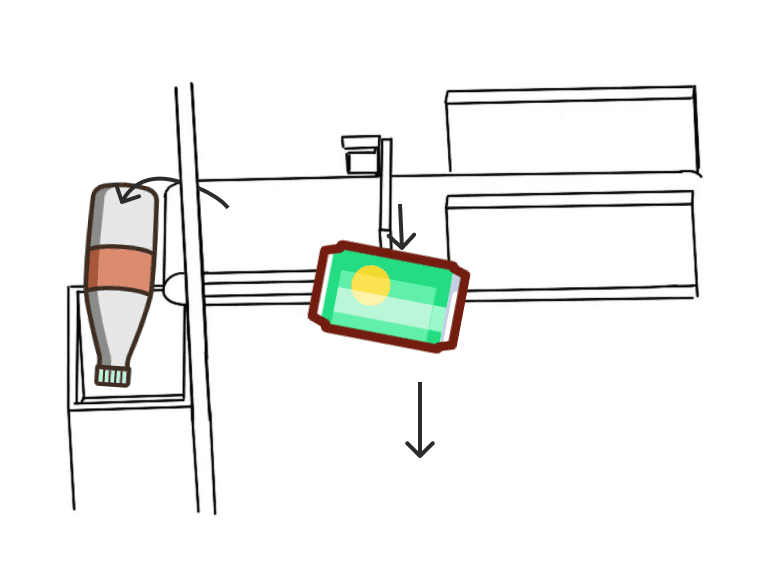
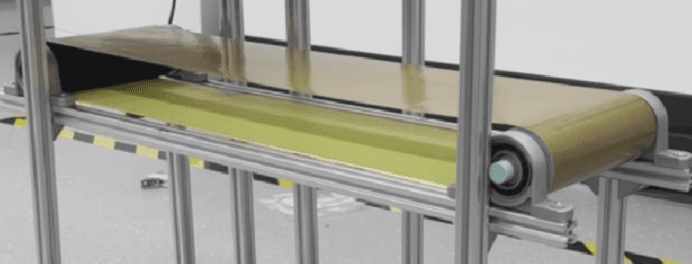
On an oblique conveyor belt, plastic bottles and cans roll down the ramp. The milk carton will be relatively static to the conveyor belt due to static friction, so it is transported to the trash can .

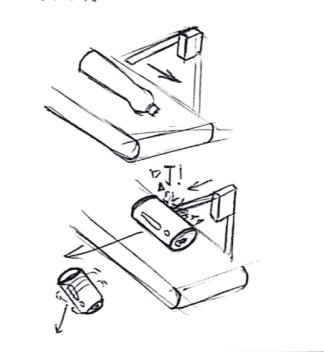
Plastic bottles and cans go on a straight conveyor belt with metal detectors installed below. When the metal detector detects the can's metal, the push rod quickly pushes the can into the trash can. Plastic bottles end up in the trash at the end of the conveyor belt.

Interaction module
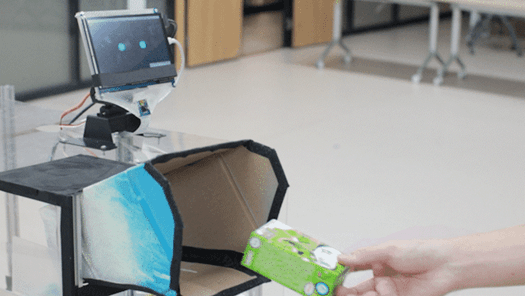
Voice broadcast

Applet

Pushing rod
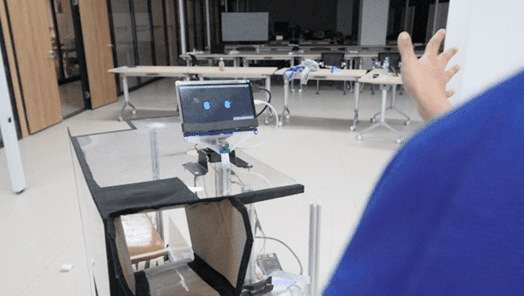
Expressions

Face tracking

Gesture recognition

User direction positioning

Metal detector
Create a free website with Framer, the website builder loved by startups, designers and agencies.